SVK Minister of Defence Peter Gajdoš attends Military Mobility Symposium in Brussels
- Author:
- Photo:
- Date: 08.06.2018
- Share: Zdieľať na Facebook
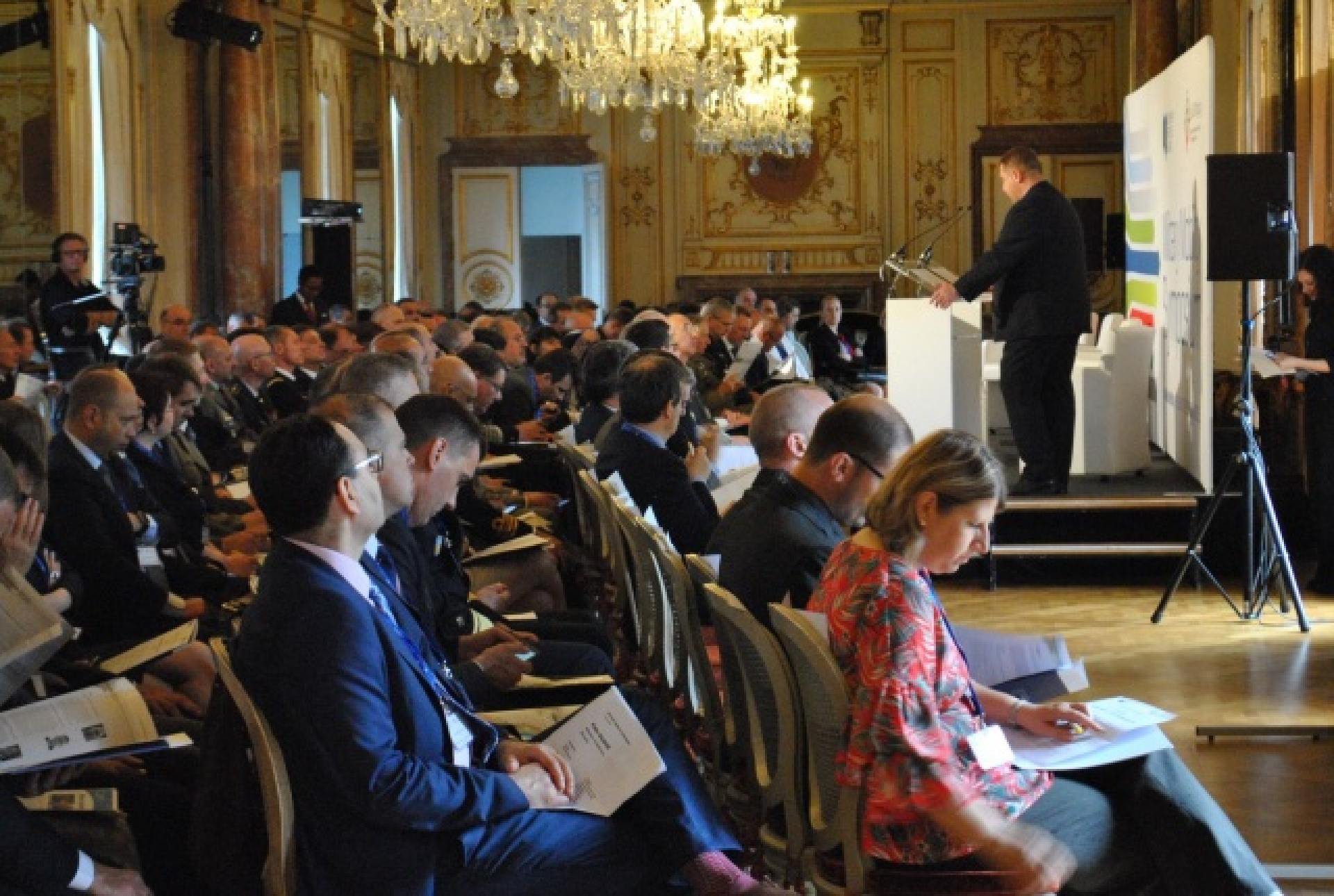
Defence Minister Peter Gajdoš attended the “Military Mobility – Key to European Security” Symposium, co-organised by the European Defence Agency (EDA) and the Bulgarian Presidency of the Council of the European Union, in Brussels on Thursday 7 June. The discussions of this topical theme have been in progress concurrently within the EU, NATO and individual Member States.
Speakers agreed that the primary task of military mobility is to make our citizens safe and secure. In the long term, EU citizens have viewed the delivery of European security to be among the EU’s key tasks. Representatives of the EU Commission made it clear that the EU will fund only dual-use civilian-military mobility projects, to improve the EUʼs transport infrastructure and services for citizens.
Minister Gajdoš pointed out that “despite the name of the theme, the subject of discussion is much wider than military mobility itself, because in practice we try to support the development of infrastructure and remove the obstacles to movement not only in the event of a military threat but also when supporting our partners in response to any natural disasters, including fires, floods or earthquakes.” Several participants of the Symposium noted that the initiative means imposing no restrictions on the sovereignty of Member States insofar that they retain their right to grant freedom of movement to military units and assets across their territory.
EU and NATO representatives were in agreement that military mobility is a key project for both organizations. “Traditionally, Slovakia supports coherent solutions to strengthen both organizations and their Member States,” said Minister Gajdoš, while also stressing that “the SVK MOD cannot implement this project alone. To implement such a complex task, several state and public government bodies and relevant private companies must be involved in the process”.
Speakers agreed that the primary task of military mobility is to make our citizens safe and secure. In the long term, EU citizens have viewed the delivery of European security to be among the EU’s key tasks. Representatives of the EU Commission made it clear that the EU will fund only dual-use civilian-military mobility projects, to improve the EUʼs transport infrastructure and services for citizens.
Minister Gajdoš pointed out that “despite the name of the theme, the subject of discussion is much wider than military mobility itself, because in practice we try to support the development of infrastructure and remove the obstacles to movement not only in the event of a military threat but also when supporting our partners in response to any natural disasters, including fires, floods or earthquakes.” Several participants of the Symposium noted that the initiative means imposing no restrictions on the sovereignty of Member States insofar that they retain their right to grant freedom of movement to military units and assets across their territory.
EU and NATO representatives were in agreement that military mobility is a key project for both organizations. “Traditionally, Slovakia supports coherent solutions to strengthen both organizations and their Member States,” said Minister Gajdoš, while also stressing that “the SVK MOD cannot implement this project alone. To implement such a complex task, several state and public government bodies and relevant private companies must be involved in the process”.
