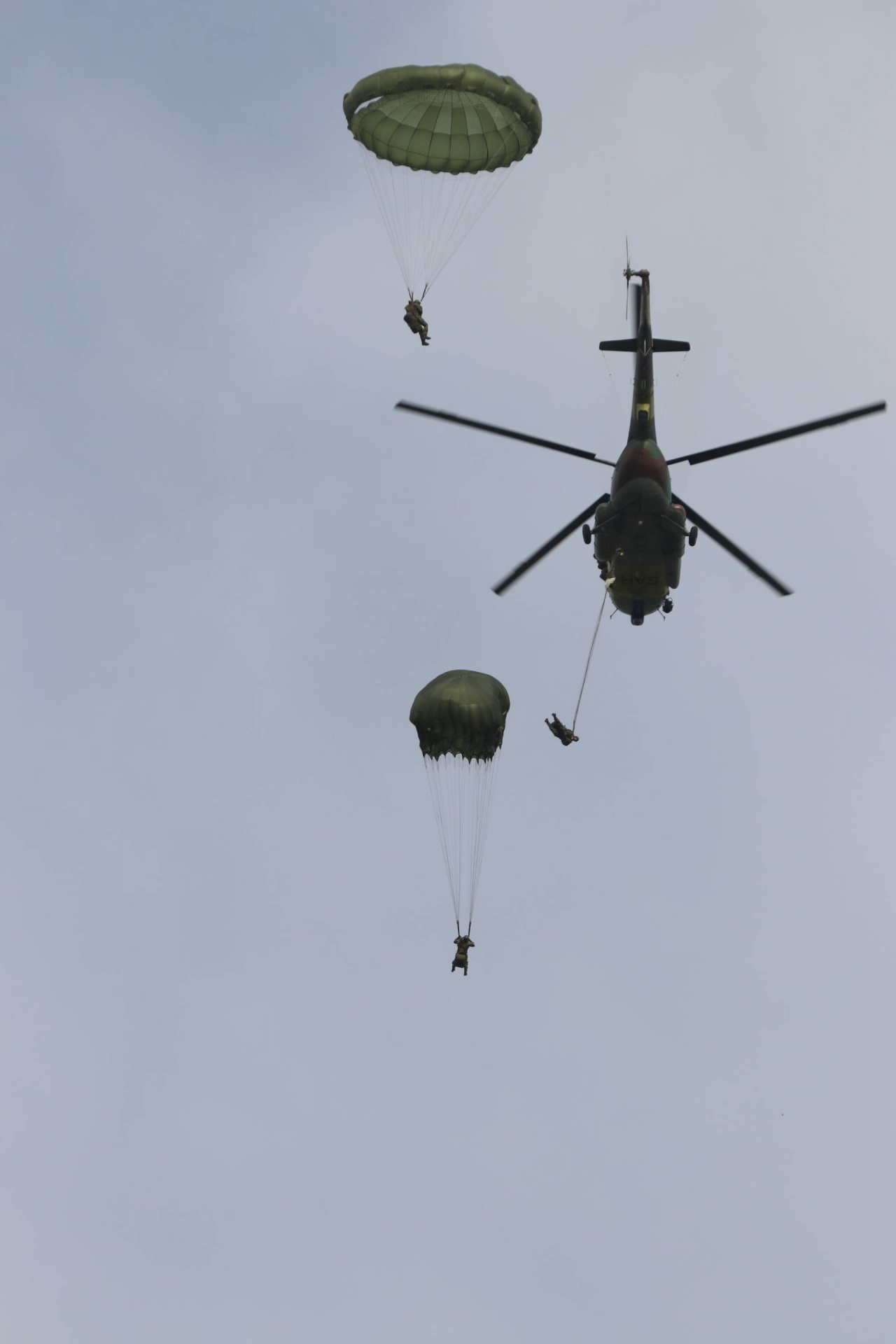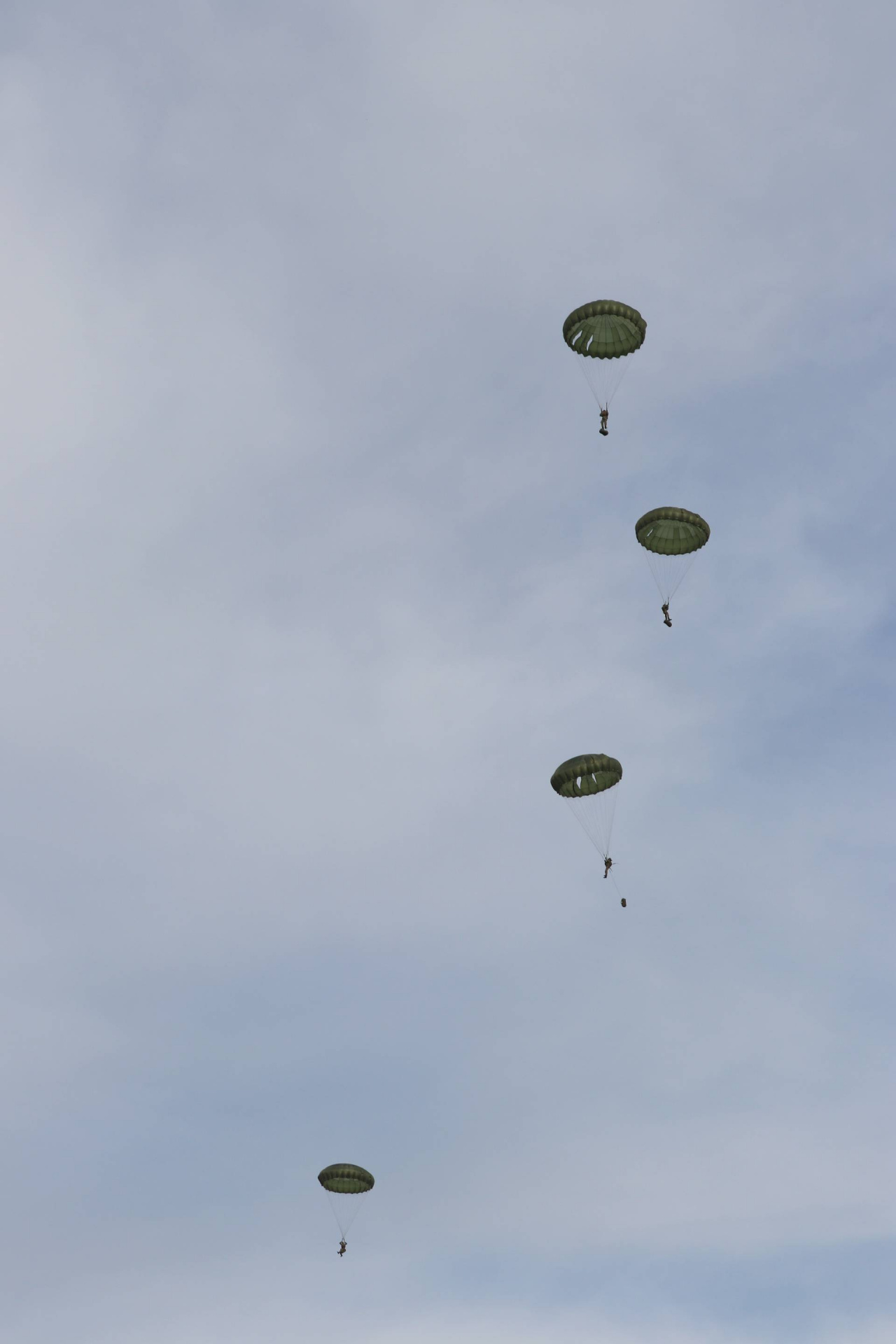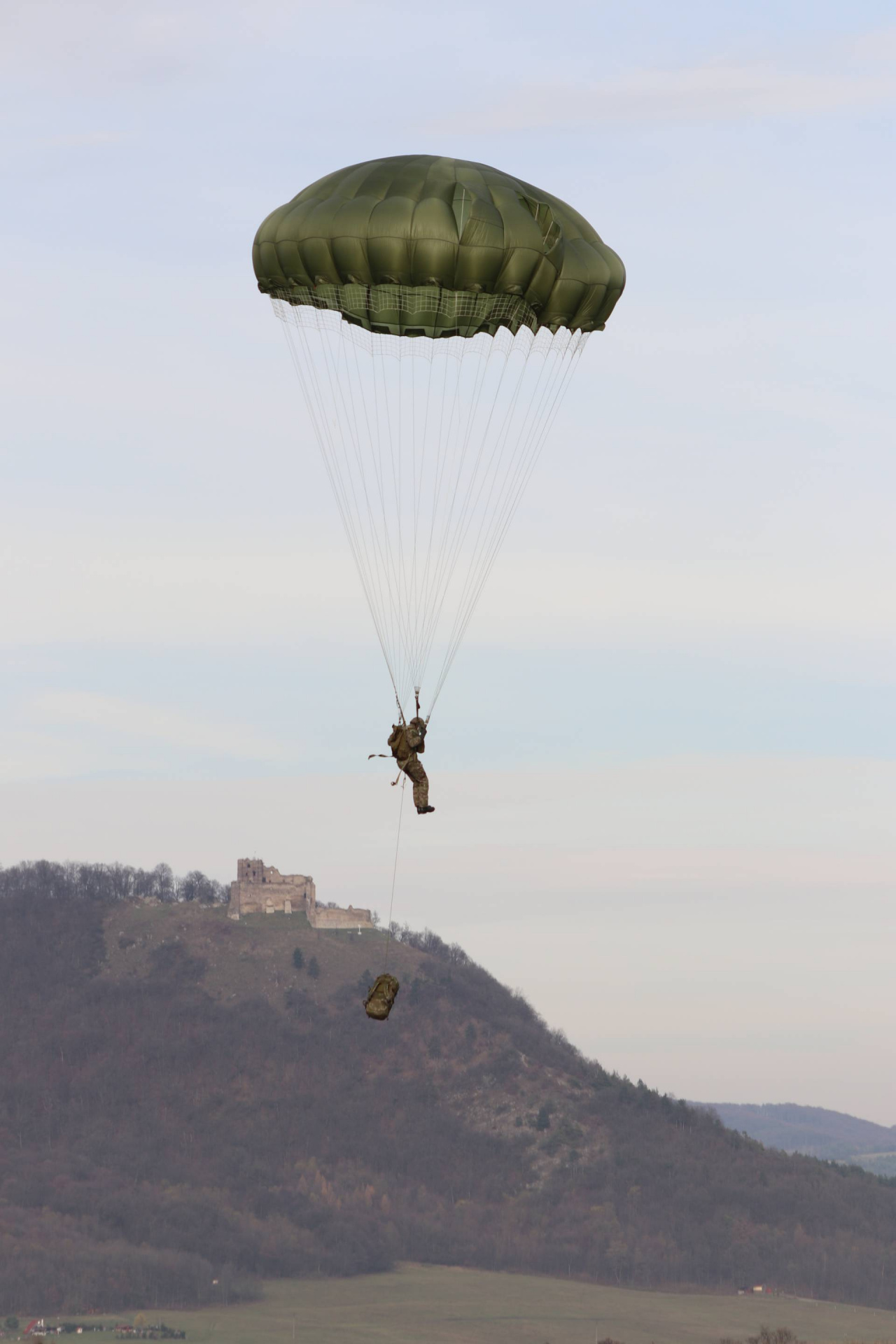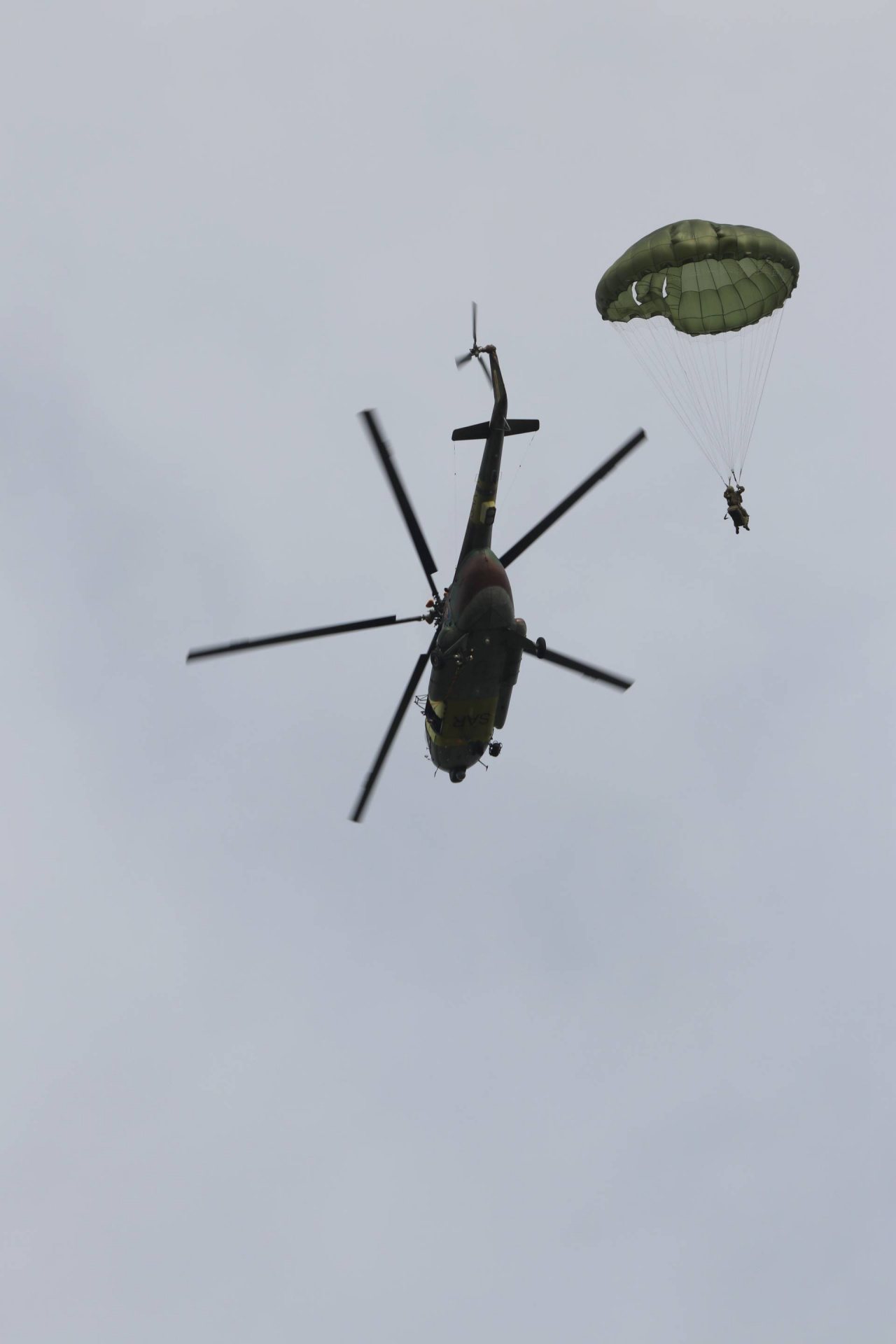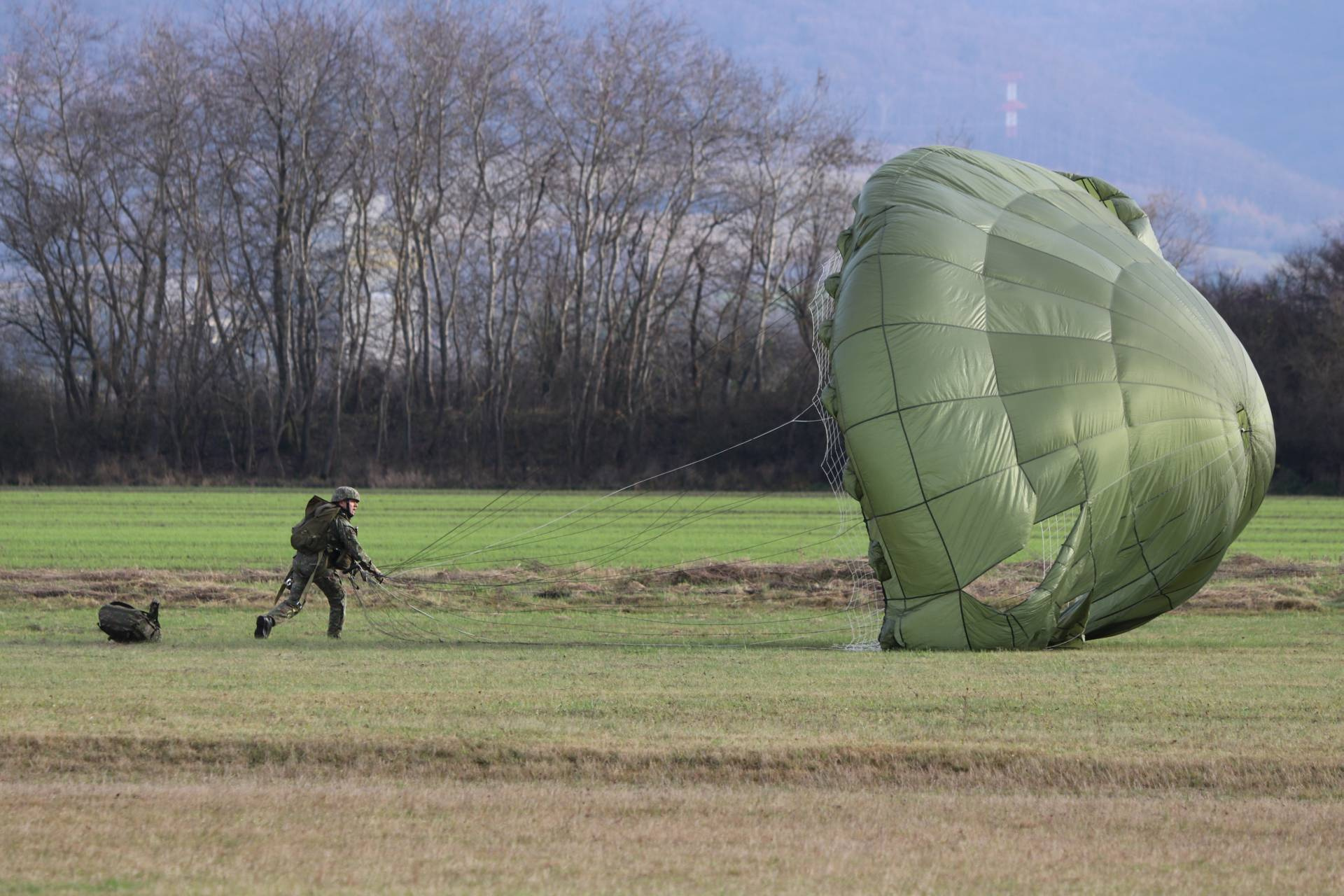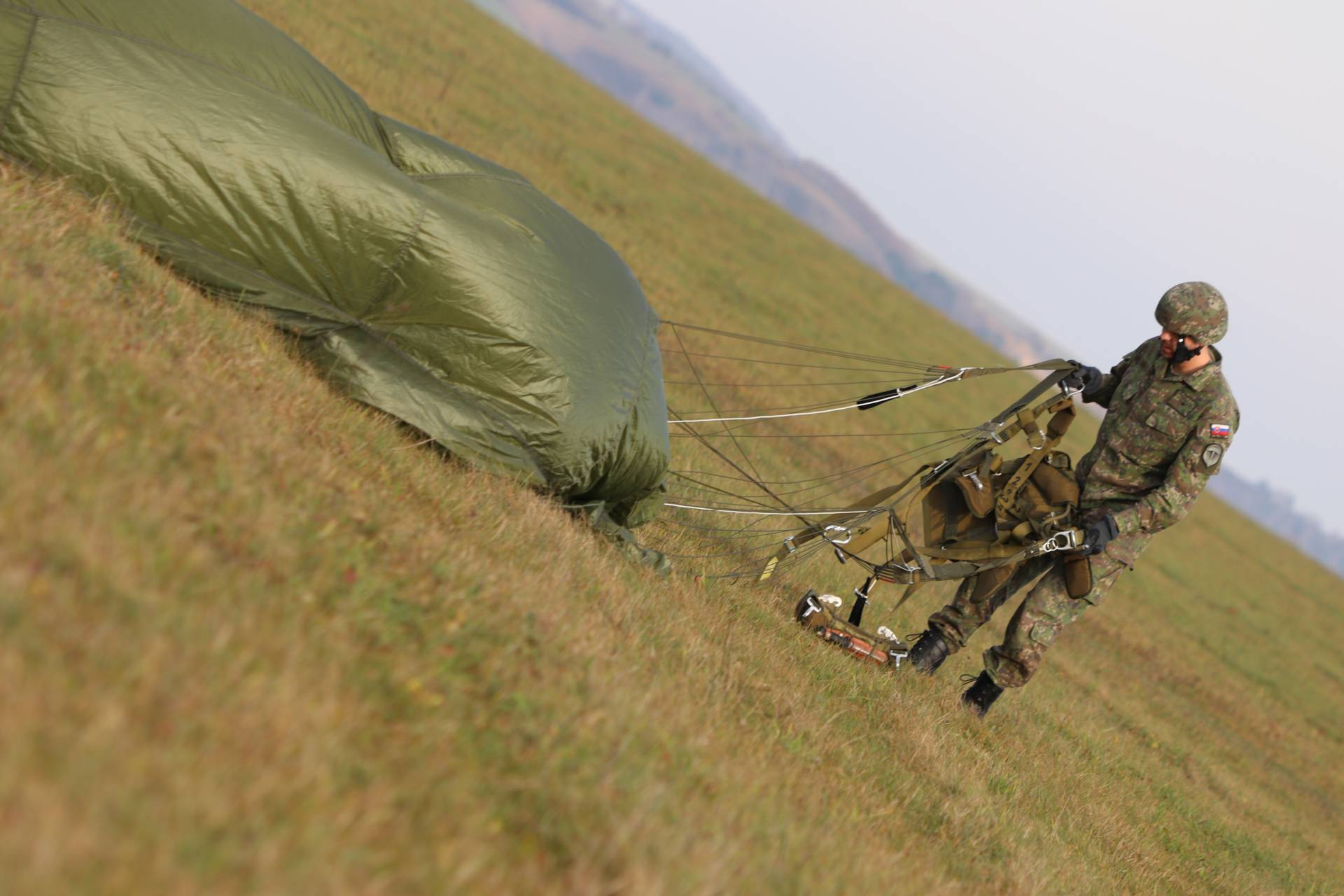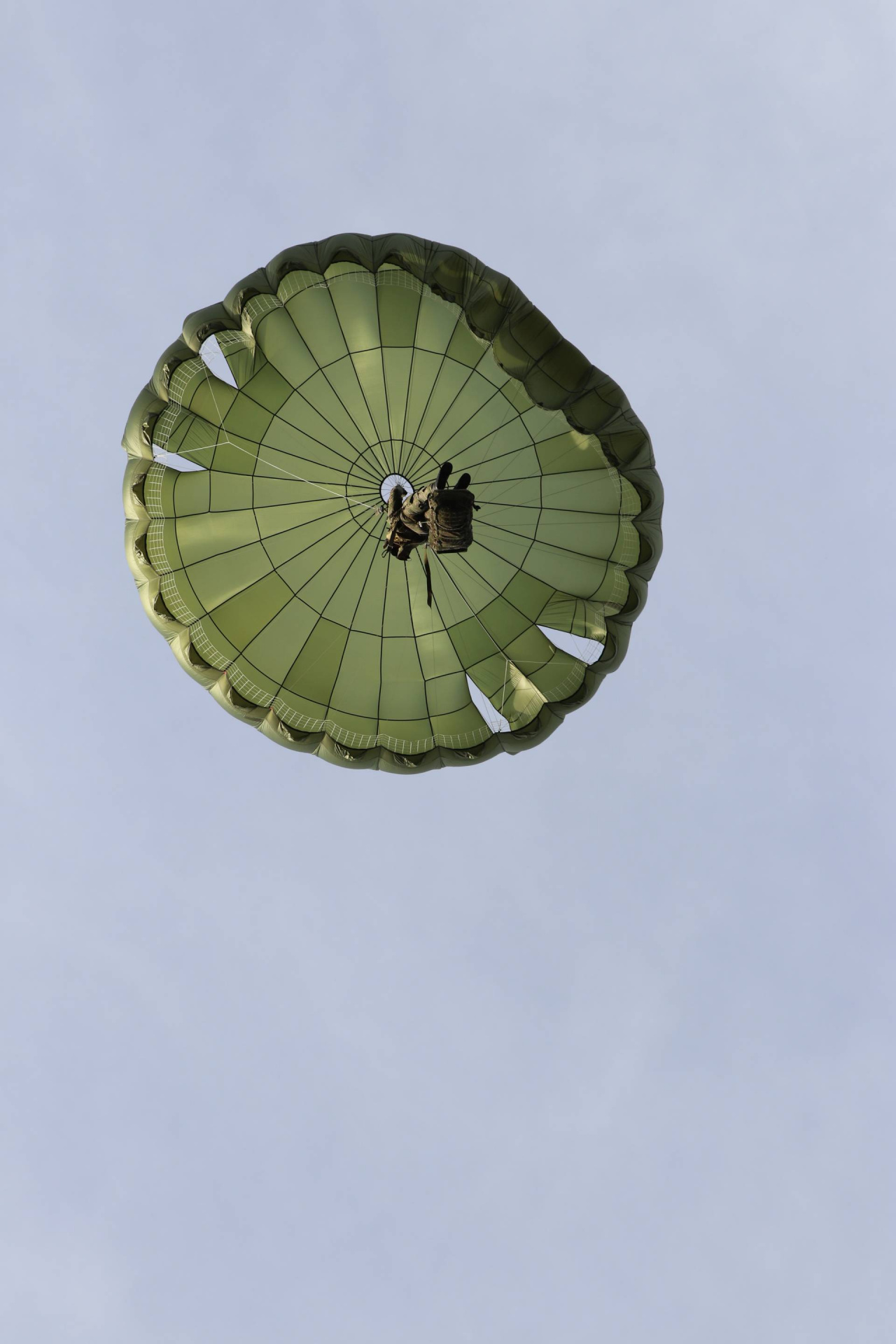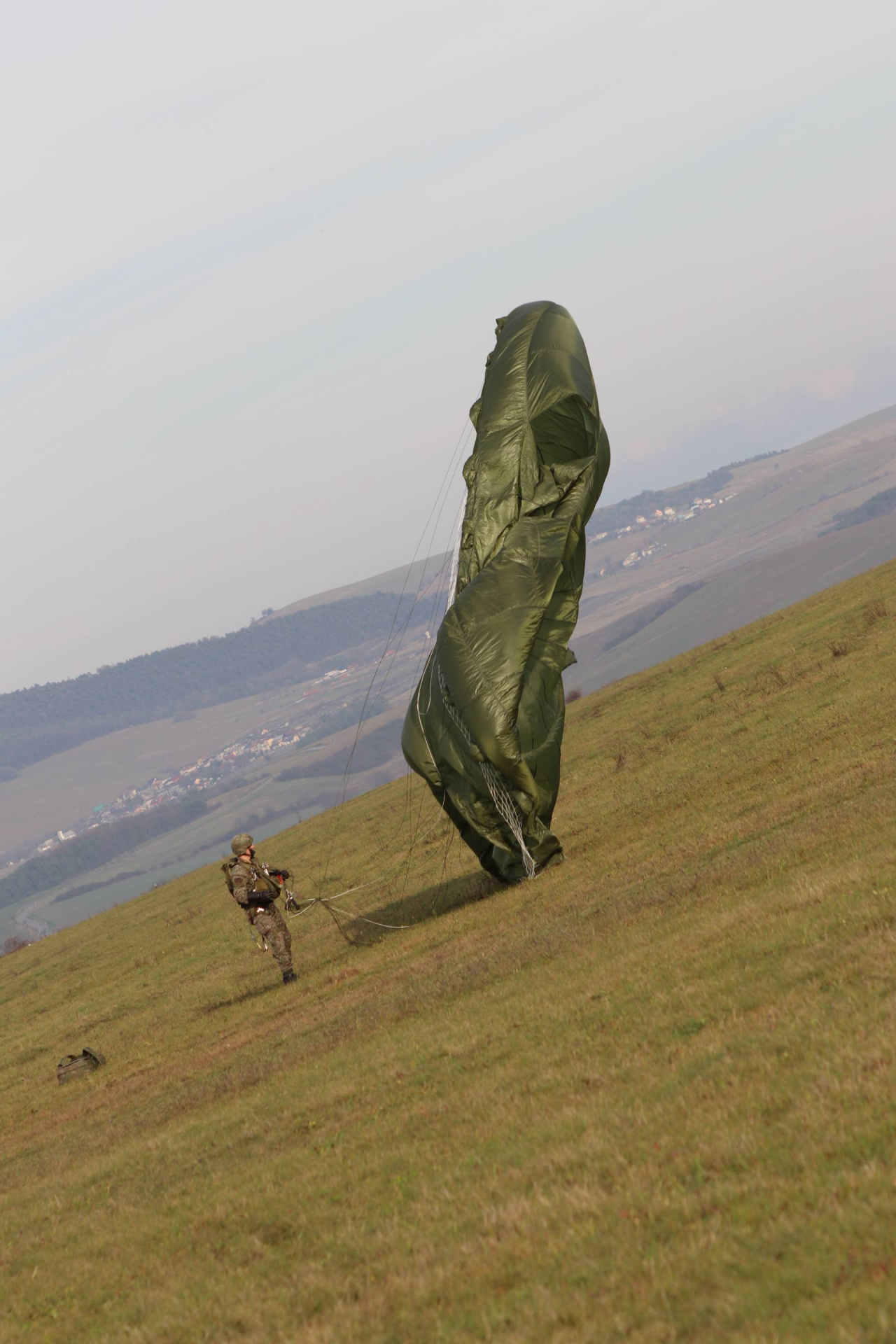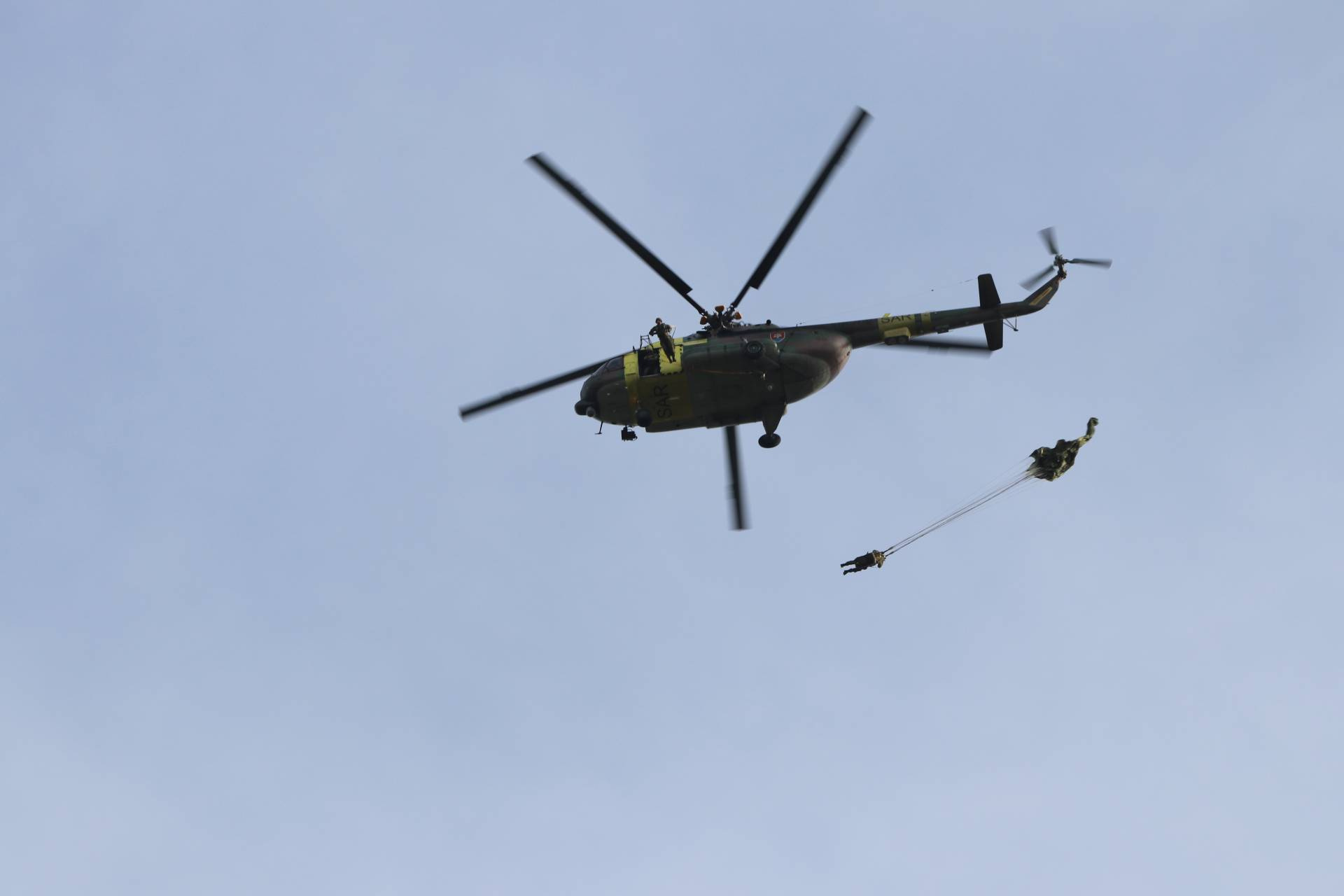
ISTAR Battalion members complete parachute training jumps over Prešov airfield
- Author:
- Photo:
- Date: 21.11.2019
- Share: Zdieľať na Facebook
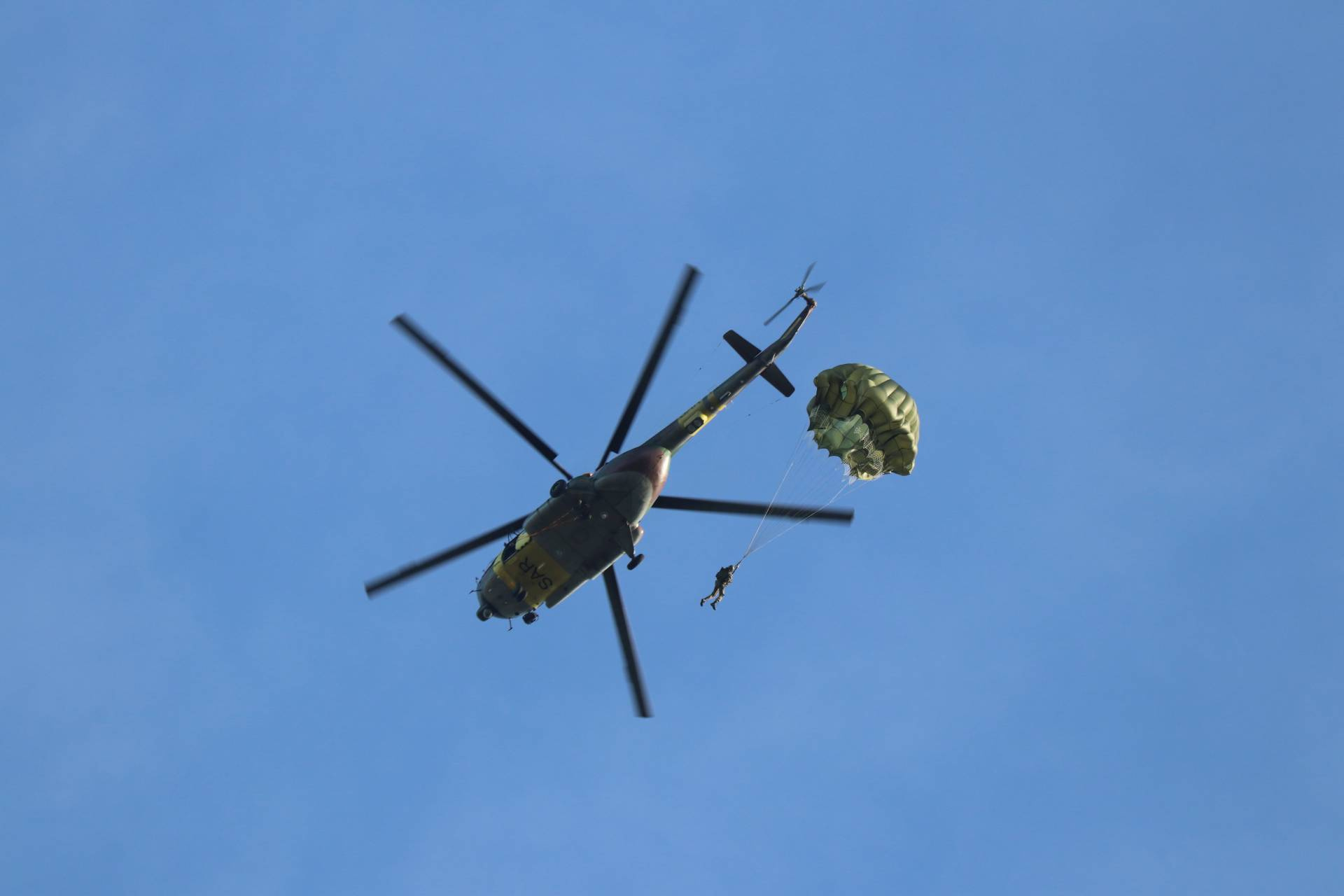
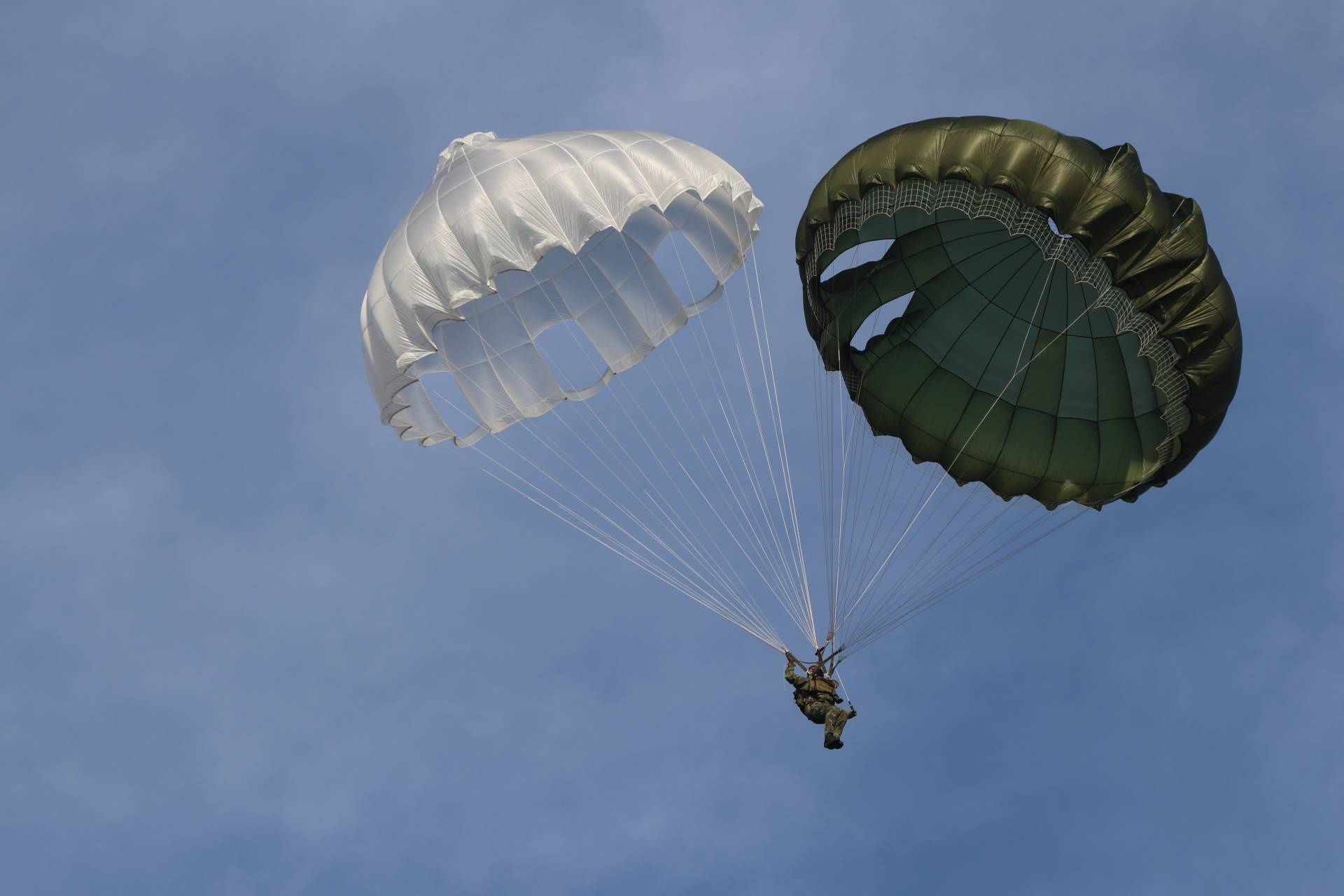
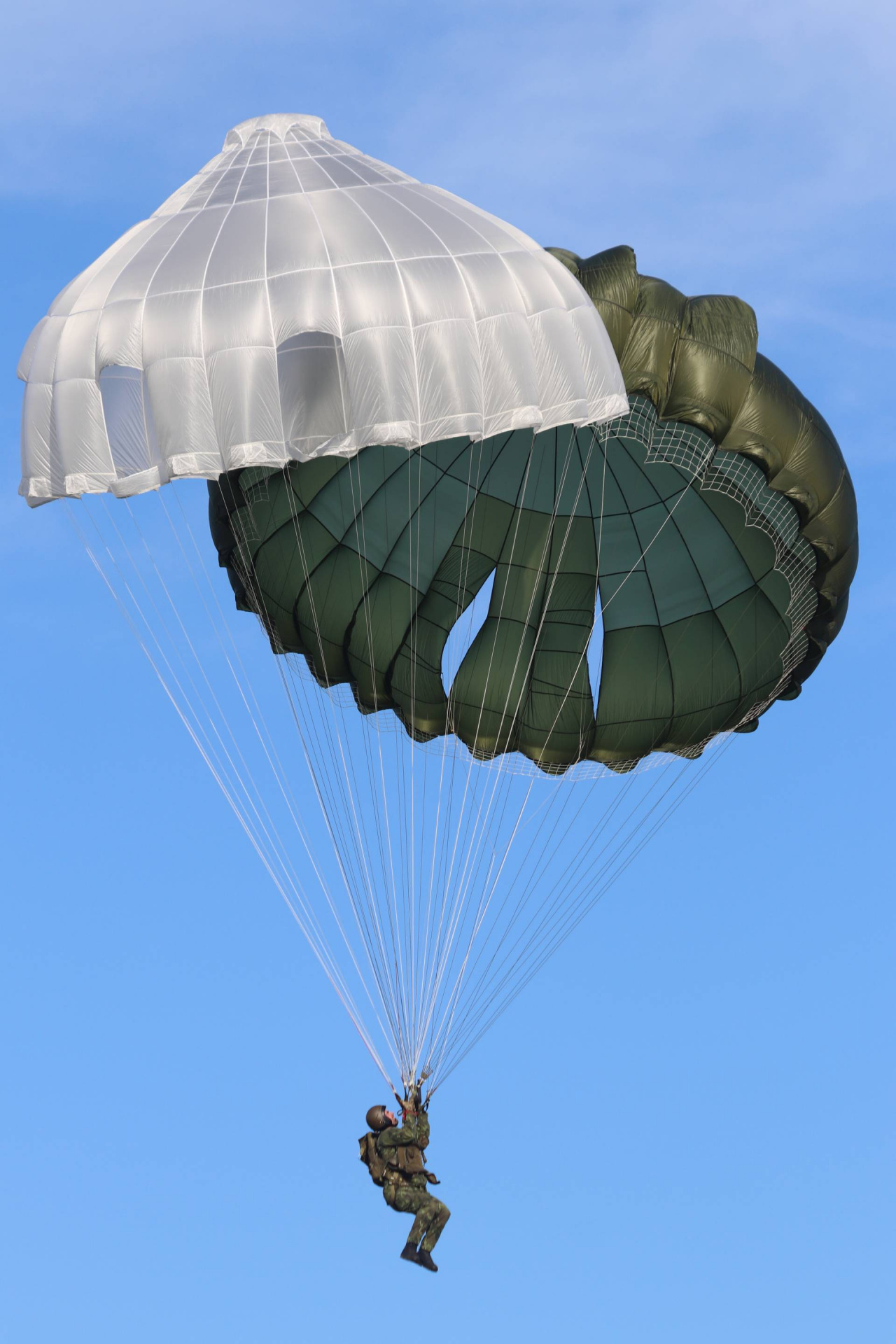
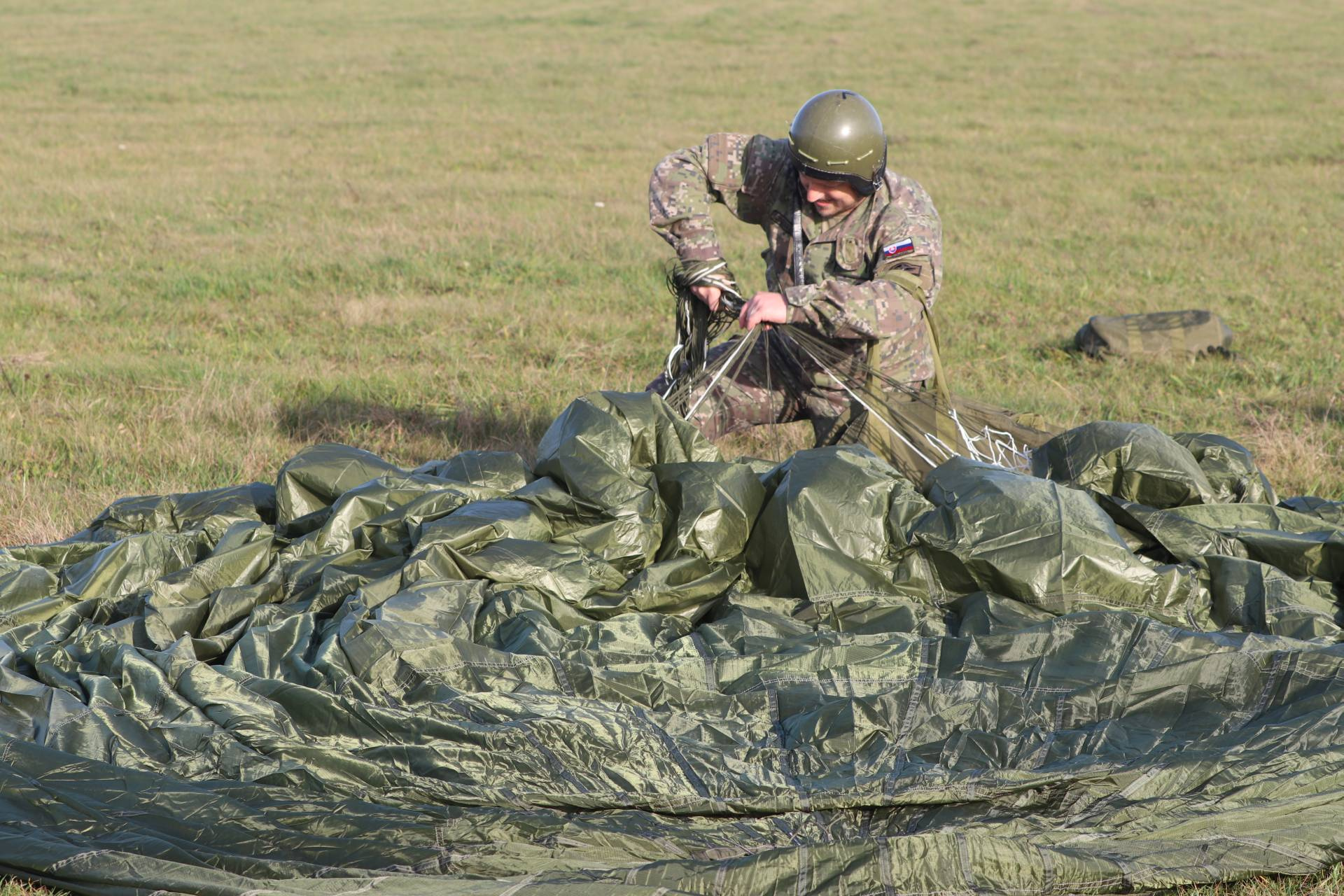
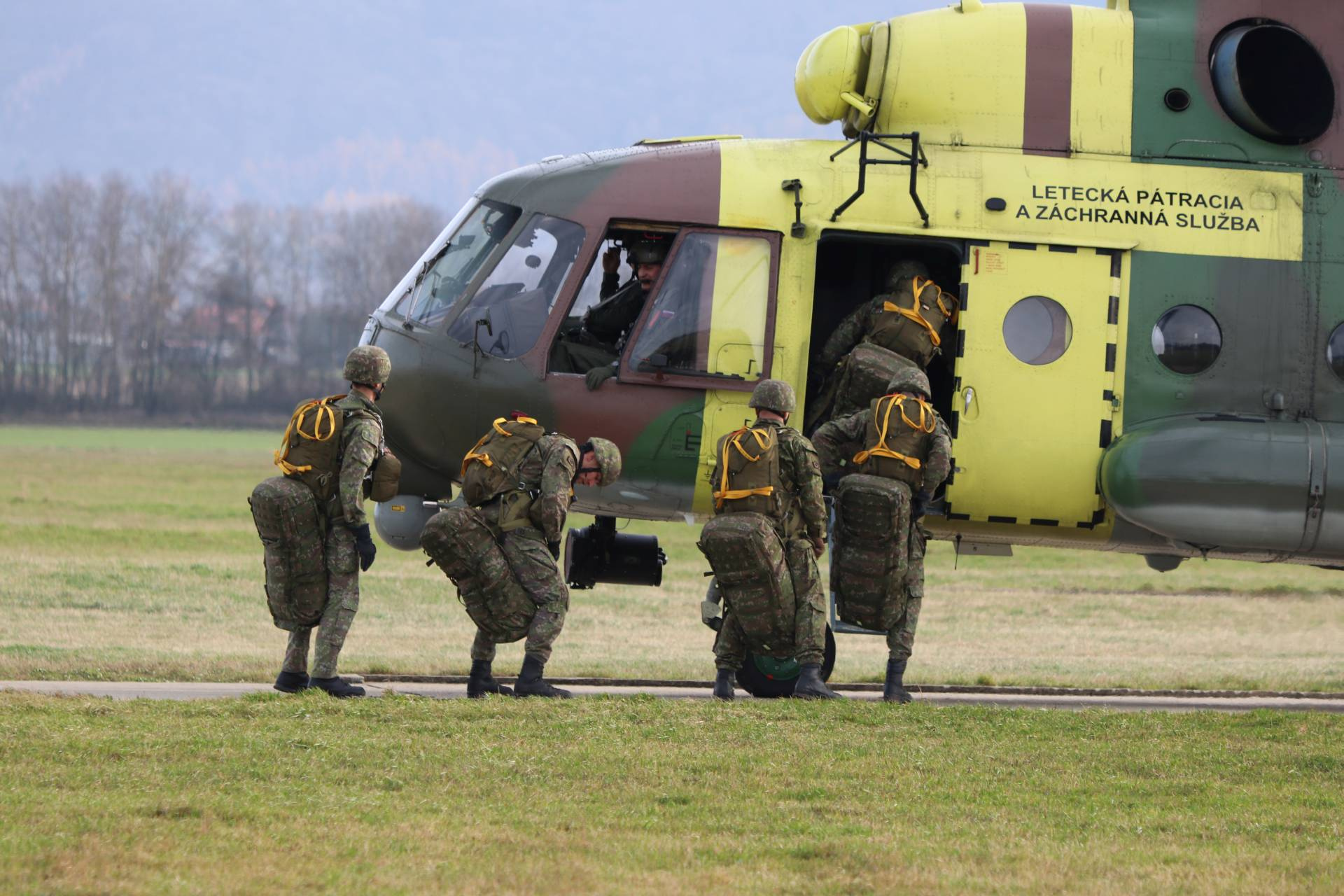
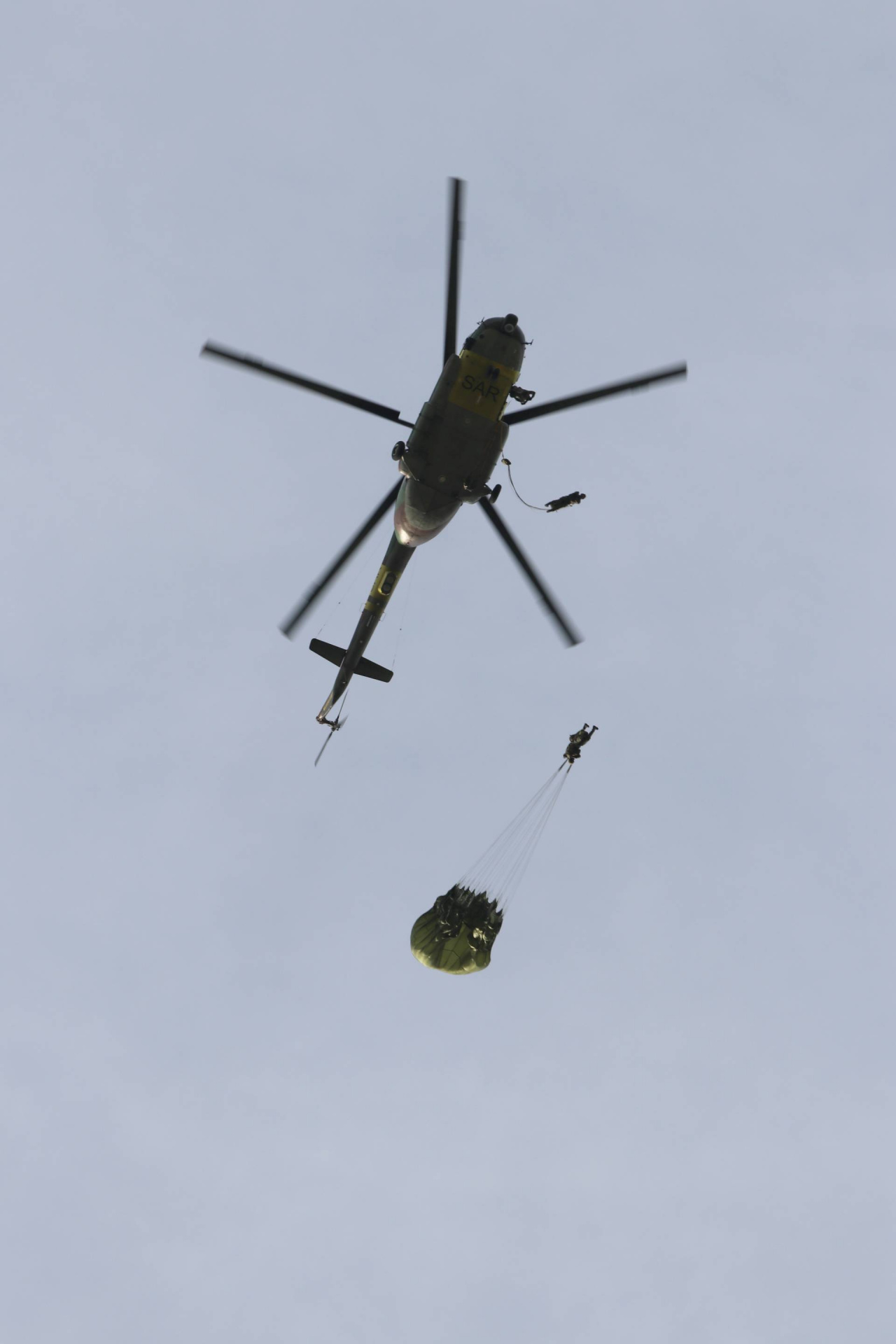
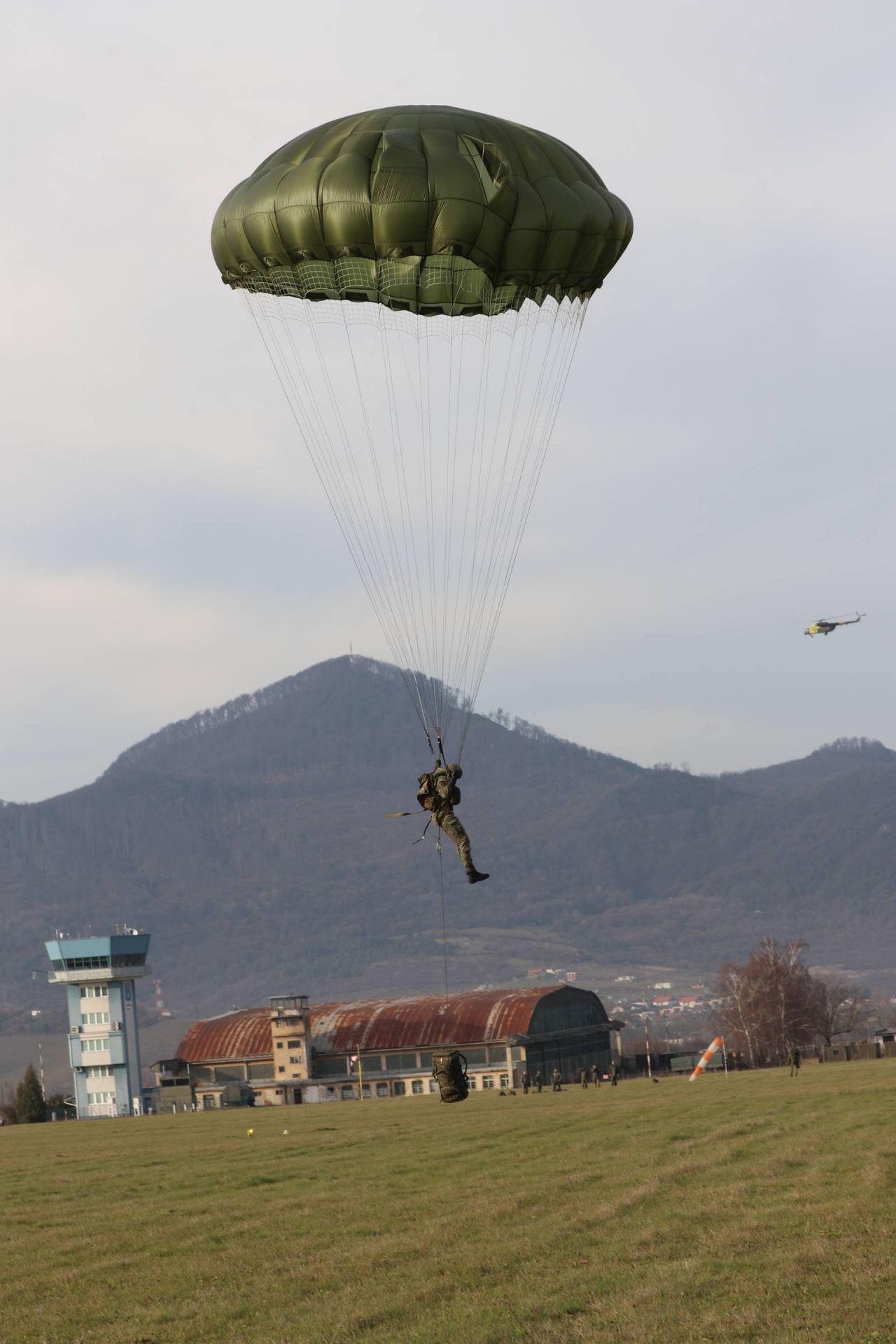
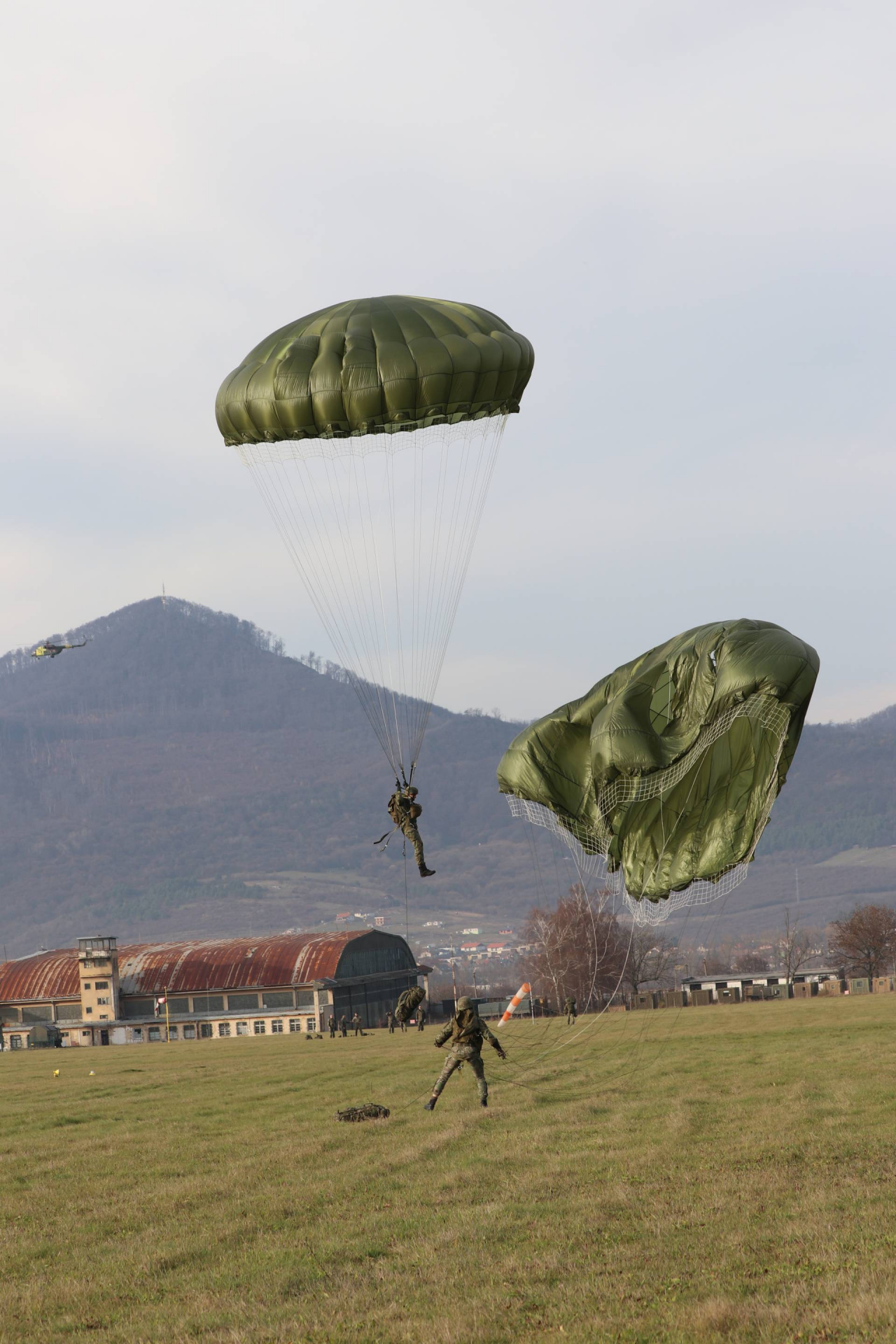
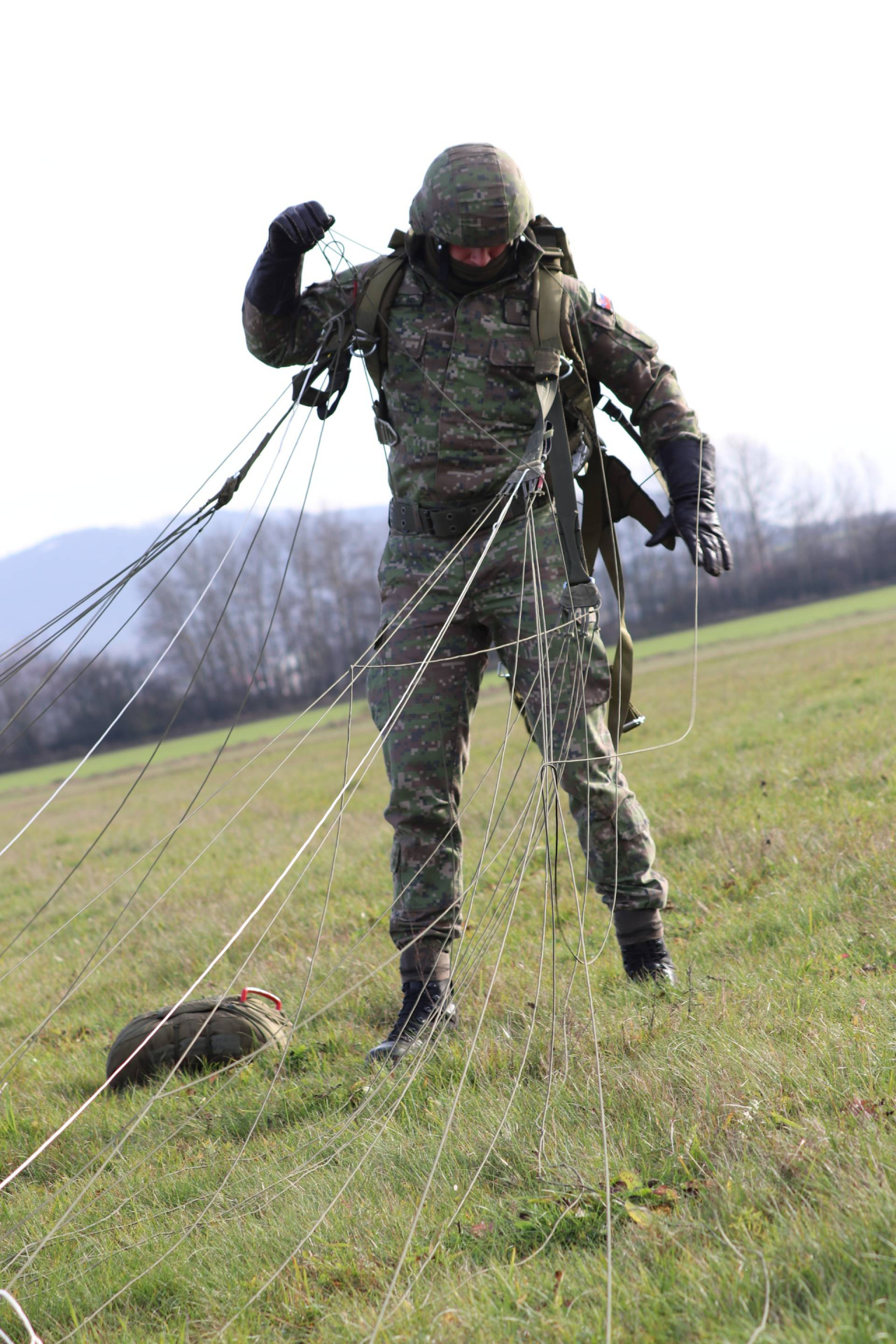
Parachute training for selected members of the Intelligence, Surveillance, Target Acquisition & Reconnaissance (ISTAR) Battalion Prešov is culminating at Prešov airfield in this third week of November. Deputy Commander of the ISTAR Battalion Maj Marián Brinček says that the aim and purpose of the parachute training assignments for selected units, for whom this is one of the main types of combat preparation, is to support the parachuting capability and troops and material on permanent stand-by to deploy by air in order to undertake combat missions in a designated area.
Maj Marián Brinček, Deputy Commander of the ISTAR Battalion, said: “The Training Year (TY) 2019 is coming to an end and that’s why our parachute training is culminating. All day and night jumps are conducted exclusively with combat loads to be used by paratroopers to accomplish their tasks. This includes rations for at least 3 days and primary and secondary weapons. We have more experienced as well as less experienced paratroopers in our unit. There is a natural process of personnel leaving and joining the armed forces. The newcomers who have reported to our unit must get fully integrated into it and develop required skills.”
One such newcomer experienced his debut parachute jump from the Mi-17 LPZS (SAR) helicopter over Prešov airfield. According to the Parachute Jump Instructors (PJIs) who acted as jump guides aboard the helicopters and their aids – MSgt Rastislava Rázca and Sgt 1st Class Martin Kopačka, as prescribed by regulations, the first time jumper must conduct a Low Altitude Low Opening (LALO) jump from as low as 600m (2000ft) above the ground. For the first time jumper, the first jump means descending in a parachute less than 3 minutes (depending on the weather conditions, because the descent is influenced by the air currents and the wind strength and direction). To perform more difficult tasks with the round-shaped OVP 80.08-1 Parachute, parachutists jump from as low as 300m (1000ft). This a low level parachute in the static line mode. The more experienced ones, especially the PJIs and those who are preparing for this role, jump with the wing-shaped gliding parachute. It is them who are in charge of the parachute preparation and training in the unit.
Major Marián Brinček added that PJIs have been retrained and jumped from Black Hawk UH-60M helicopters. “Parachute training and jumps from this type of helicopter will be in full swing throughout 2020. Members of the ISTAR Battalion gained some very good experience in the recent exercise Clear Sign, involving reconnaissance troops at the Training Centre Lešť, where they trained alongside soldiers of the 102nd Reconnaissance Battalion, based in Prostejov, Czech Republic. They were inserted into the training area by parachuting with the OVP-12 SL-1 Parachutes from the Czech Air Force’s CASA C-295M.”
Maj Marián Brinček, Deputy Commander of the ISTAR Battalion, said: “The Training Year (TY) 2019 is coming to an end and that’s why our parachute training is culminating. All day and night jumps are conducted exclusively with combat loads to be used by paratroopers to accomplish their tasks. This includes rations for at least 3 days and primary and secondary weapons. We have more experienced as well as less experienced paratroopers in our unit. There is a natural process of personnel leaving and joining the armed forces. The newcomers who have reported to our unit must get fully integrated into it and develop required skills.”
One such newcomer experienced his debut parachute jump from the Mi-17 LPZS (SAR) helicopter over Prešov airfield. According to the Parachute Jump Instructors (PJIs) who acted as jump guides aboard the helicopters and their aids – MSgt Rastislava Rázca and Sgt 1st Class Martin Kopačka, as prescribed by regulations, the first time jumper must conduct a Low Altitude Low Opening (LALO) jump from as low as 600m (2000ft) above the ground. For the first time jumper, the first jump means descending in a parachute less than 3 minutes (depending on the weather conditions, because the descent is influenced by the air currents and the wind strength and direction). To perform more difficult tasks with the round-shaped OVP 80.08-1 Parachute, parachutists jump from as low as 300m (1000ft). This a low level parachute in the static line mode. The more experienced ones, especially the PJIs and those who are preparing for this role, jump with the wing-shaped gliding parachute. It is them who are in charge of the parachute preparation and training in the unit.
Major Marián Brinček added that PJIs have been retrained and jumped from Black Hawk UH-60M helicopters. “Parachute training and jumps from this type of helicopter will be in full swing throughout 2020. Members of the ISTAR Battalion gained some very good experience in the recent exercise Clear Sign, involving reconnaissance troops at the Training Centre Lešť, where they trained alongside soldiers of the 102nd Reconnaissance Battalion, based in Prostejov, Czech Republic. They were inserted into the training area by parachuting with the OVP-12 SL-1 Parachutes from the Czech Air Force’s CASA C-295M.”