MOD managed the Slovak Presidency of the Council of the EU at a high standard
- Author:
- Photo:
- Date: 03.01.2017
- Share: Zdieľať na Facebook
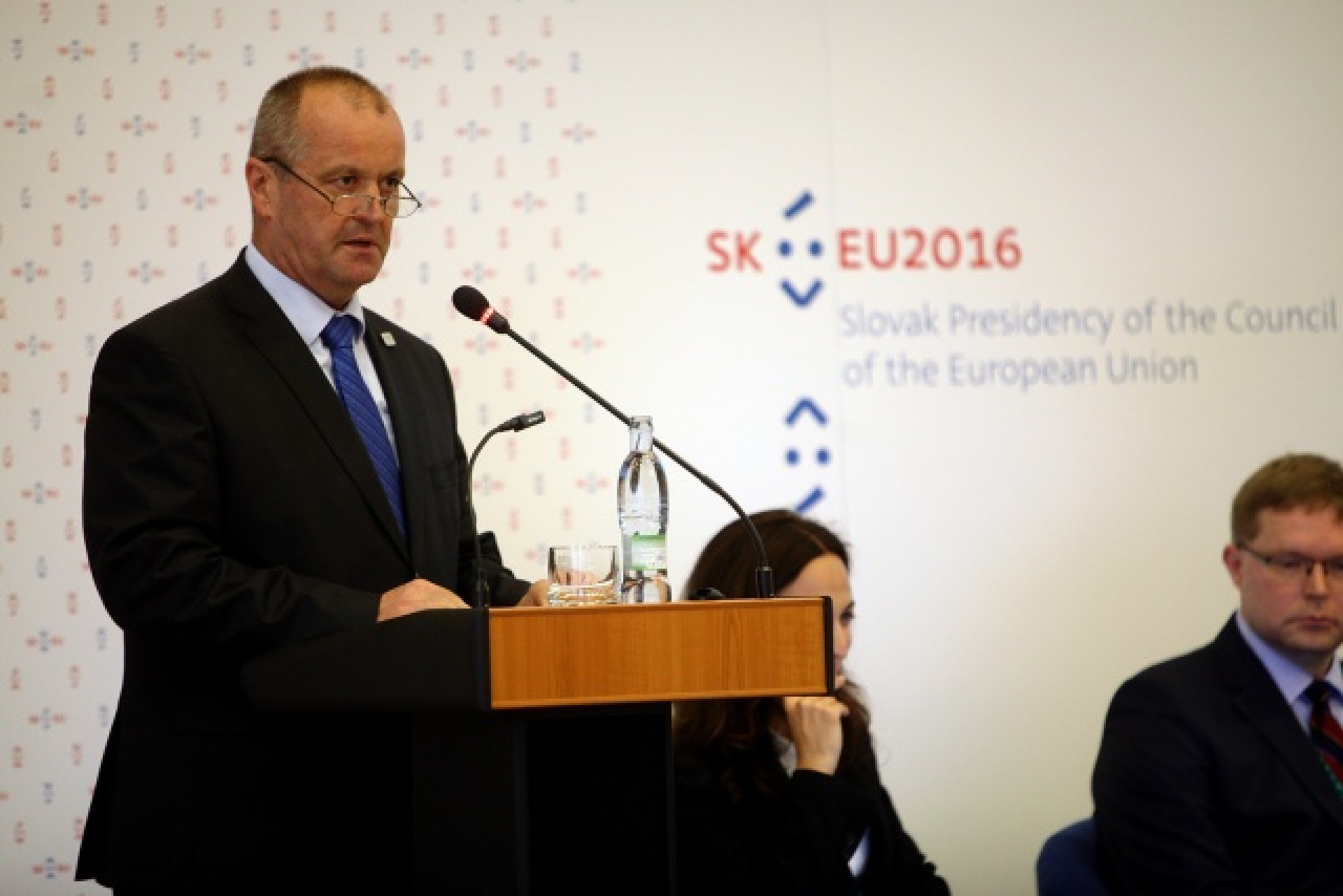
Over the course of the 6-month Slovak Presidency of the Council of the European Union, the SVK Ministry of Defence played a responsible role in bringing important tasks to completion. The MOD organised the Informal Meeting of European Union Ministers of Defence in September in Bratislava and held a wide range of EU-related activities, while the SVK Armed Forces and other components partook in facilitating the smooth passage of the Slovak EU Presidency.
The MOD was entrusted with hosting 1 ʻCategory Aʼ event at the highest level, 11 ʻCategory Bʼ events, 3 special activities, and 6 informal social events. In his statement on this matter, Minister Gajdoš highlighted the smooth course of all of the events held under the auspices of the Ministry of Defence. “We managed the historically first EU Presidency at a high standard. And when it comes to the MOD's themes, we have shifted them forward considerably. Also, I highly appreciated the presence of the High Representative of the Union for Foreign Affairs and Security Policy Federica Mogherini and NATO Secretary General Jens Stoltenberg at the Informal Meeting in Bratislava. We followed up on the debated themes at the November Summit in Brussels,” reflected the Minister. Finally, he used the opportunity to extend his thanks to everyone involved in the EU events for accomplishing the tasks professionally: “Slovakia has proved that it is capable of coping even with such difficult tasks.”
For the MOD, the key priorities of the Slovak Presidency of the Council of the European Union incorporated the cooperation between the EU and NATO, the Eastern Partnership and the Western Balkans, and the follow-up to the Global Strategy for the European Union's Foreign and Security Policy (EUGS). These were projected into the MOD's agenda of events and activities throughout the entire presidency. Of them all, the most high profile event from the MOD's point of view was the Informal Meeting of EU Ministers of Defence in September in Bratislava, which was chaired by the High Representative of the Union for Foreign Affairs and Security Police and Vice-President of the European Commission Federica Mogherini. The significance of the event was underlined by the presence of NATO Secretary General Jens Stoltenberg. During the informal meeting, Slovakia became a member of the Eastern Partnership Technical Assistance Trust Fund (EPTATF), designed to facilitate the Eastern Partnership countries' involvement in the activities of the EU's Common Security and Defence Policy (CSDP).
Besides the informal ministerial, the MOD also hosted the Conference on the Follow-up to the Global Strategy for the European Union's Foreign and Security Policy (EUGS) – Defence Policy Aspects. Partly thanks to this, the European External Action Service (EEAS) drafted, under the leadership of the High Representative/Vice-President, the Implementation Plan on Defence and Security, which will be elaborated on in specific areas of interest.
Separately, the MOD hosted another two specialist conferences with the participation of international experts, including EU and NATO representatives, addressing cyber security issues and hybrid threats. On the premises of both international organisations during the SK PRES, Slovakia, too, played a part in preparing a package of measures to translate the Joint Declaration on EU-NATO cooperation into practice. The MOD also delivered two courses on chemical, biological, radiological and nuclear (CBRN) defence for participants from the Eastern Partnership and Western Balkan countries, and together with Serbia it conducted a workshop aimed at commanders of mechanised elements.
Over the course of our presidency, the SVK Armed Forces carried out supporting tasks for the Police Corps of the Slovak Republic in protecting public order and buildings. Additionally, they performed assistance tasks during the Bratislava Summit and the Informal Meeting of the Speakers of the EU Parliaments – Bratislava Parliamentary Summit. The security measures also involved CBRN specialists and bomb disposal officers. Members of the 5th Special Forces Regiment Žilina made a valuable contribution as well. Among other tasks was the provision of dispatchers, the coordination of minivan drivers, and other activities. In total, the SVK Armed Forces deployed over 4,500 active duty soldiers during the 6-month Slovak EU Presidency.
The MOD was entrusted with hosting 1 ʻCategory Aʼ event at the highest level, 11 ʻCategory Bʼ events, 3 special activities, and 6 informal social events. In his statement on this matter, Minister Gajdoš highlighted the smooth course of all of the events held under the auspices of the Ministry of Defence. “We managed the historically first EU Presidency at a high standard. And when it comes to the MOD's themes, we have shifted them forward considerably. Also, I highly appreciated the presence of the High Representative of the Union for Foreign Affairs and Security Policy Federica Mogherini and NATO Secretary General Jens Stoltenberg at the Informal Meeting in Bratislava. We followed up on the debated themes at the November Summit in Brussels,” reflected the Minister. Finally, he used the opportunity to extend his thanks to everyone involved in the EU events for accomplishing the tasks professionally: “Slovakia has proved that it is capable of coping even with such difficult tasks.”
For the MOD, the key priorities of the Slovak Presidency of the Council of the European Union incorporated the cooperation between the EU and NATO, the Eastern Partnership and the Western Balkans, and the follow-up to the Global Strategy for the European Union's Foreign and Security Policy (EUGS). These were projected into the MOD's agenda of events and activities throughout the entire presidency. Of them all, the most high profile event from the MOD's point of view was the Informal Meeting of EU Ministers of Defence in September in Bratislava, which was chaired by the High Representative of the Union for Foreign Affairs and Security Police and Vice-President of the European Commission Federica Mogherini. The significance of the event was underlined by the presence of NATO Secretary General Jens Stoltenberg. During the informal meeting, Slovakia became a member of the Eastern Partnership Technical Assistance Trust Fund (EPTATF), designed to facilitate the Eastern Partnership countries' involvement in the activities of the EU's Common Security and Defence Policy (CSDP).
Besides the informal ministerial, the MOD also hosted the Conference on the Follow-up to the Global Strategy for the European Union's Foreign and Security Policy (EUGS) – Defence Policy Aspects. Partly thanks to this, the European External Action Service (EEAS) drafted, under the leadership of the High Representative/Vice-President, the Implementation Plan on Defence and Security, which will be elaborated on in specific areas of interest.
Separately, the MOD hosted another two specialist conferences with the participation of international experts, including EU and NATO representatives, addressing cyber security issues and hybrid threats. On the premises of both international organisations during the SK PRES, Slovakia, too, played a part in preparing a package of measures to translate the Joint Declaration on EU-NATO cooperation into practice. The MOD also delivered two courses on chemical, biological, radiological and nuclear (CBRN) defence for participants from the Eastern Partnership and Western Balkan countries, and together with Serbia it conducted a workshop aimed at commanders of mechanised elements.
Over the course of our presidency, the SVK Armed Forces carried out supporting tasks for the Police Corps of the Slovak Republic in protecting public order and buildings. Additionally, they performed assistance tasks during the Bratislava Summit and the Informal Meeting of the Speakers of the EU Parliaments – Bratislava Parliamentary Summit. The security measures also involved CBRN specialists and bomb disposal officers. Members of the 5th Special Forces Regiment Žilina made a valuable contribution as well. Among other tasks was the provision of dispatchers, the coordination of minivan drivers, and other activities. In total, the SVK Armed Forces deployed over 4,500 active duty soldiers during the 6-month Slovak EU Presidency.
