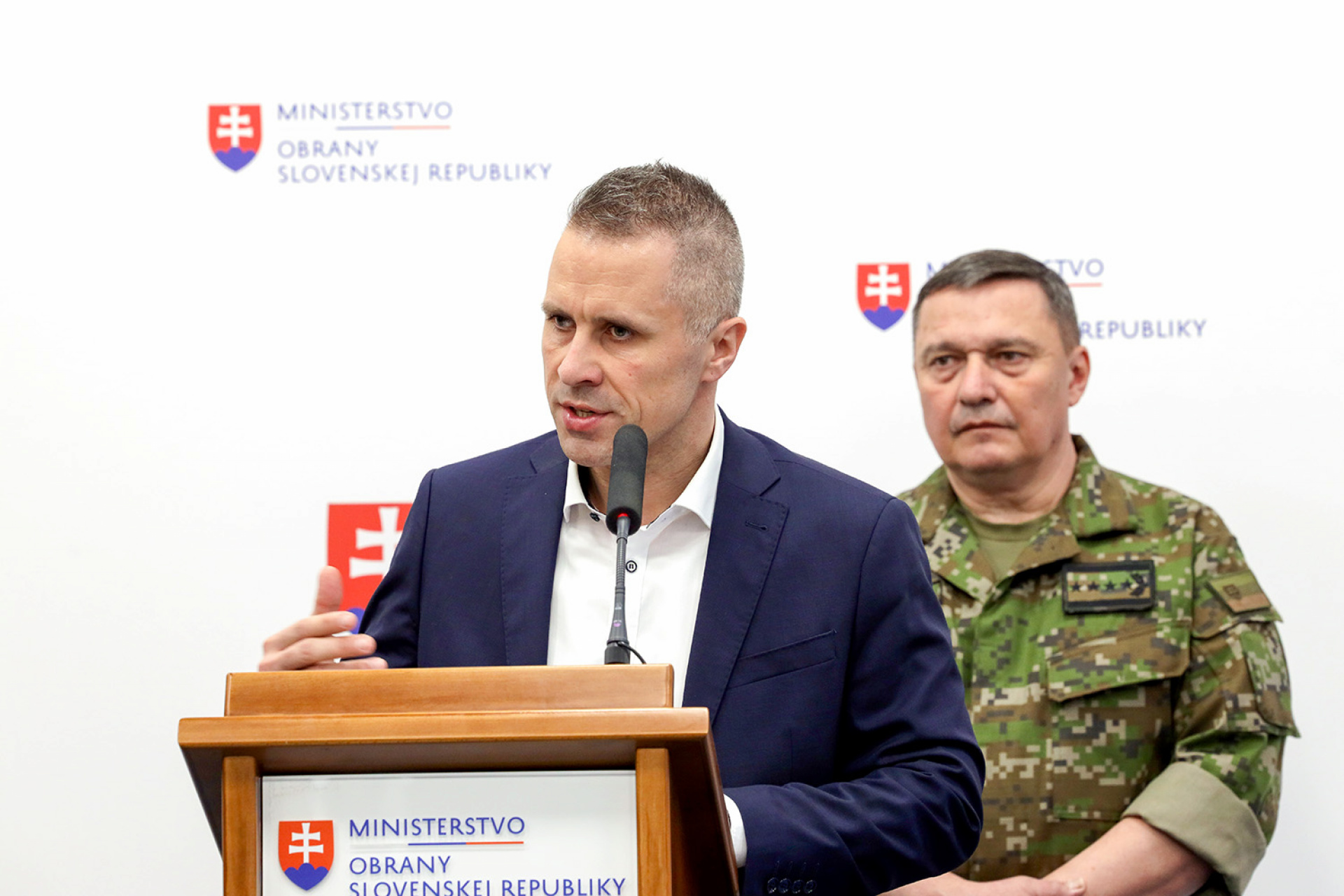
J. Naď: Our third year in office at the Ministry of Defence was unequivocally about strengthening SVK defences and supporting our neighbour under attack
- Author:
- Photo:
- Date: 29.03.2023
- Share: Zdieľať na Facebook
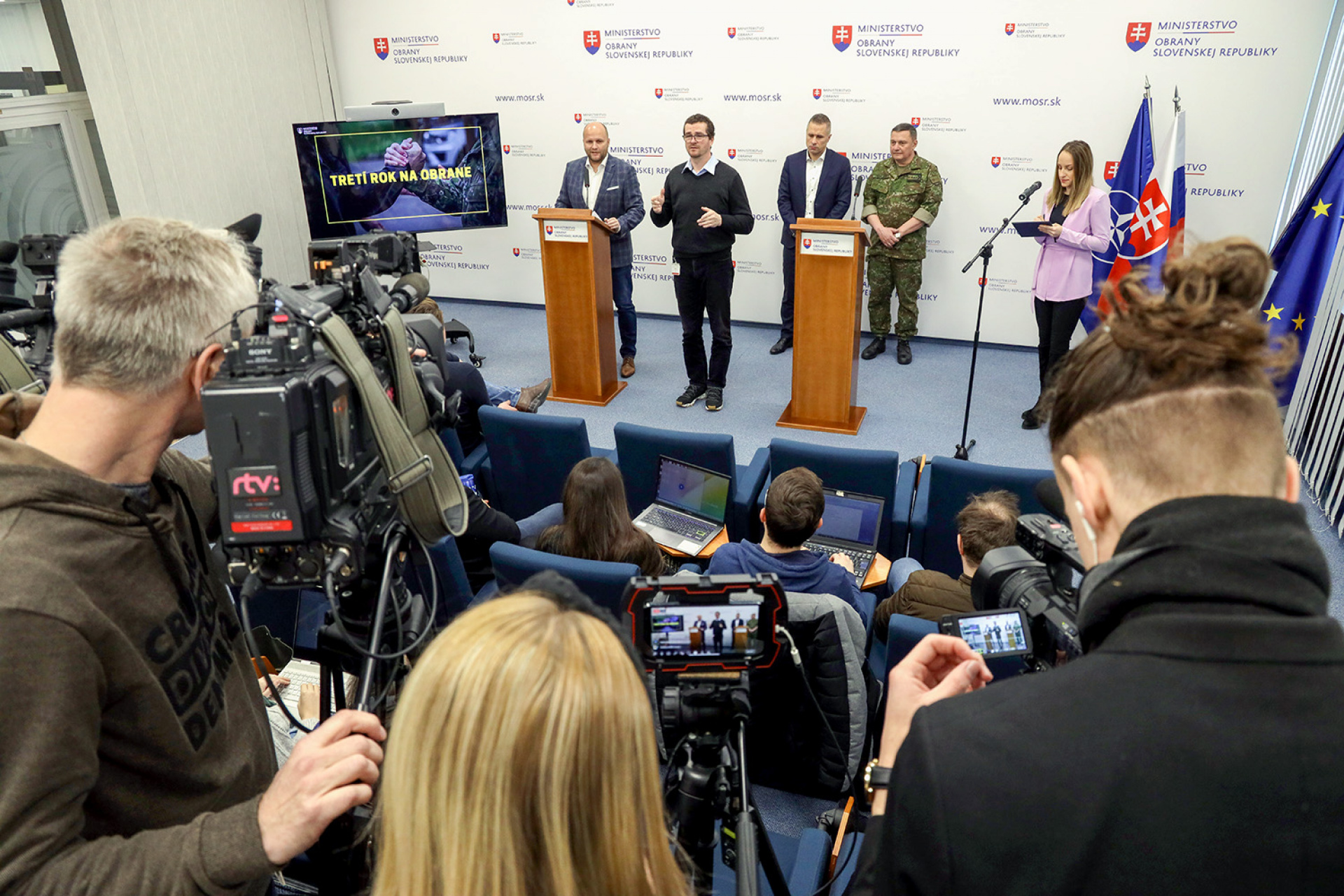
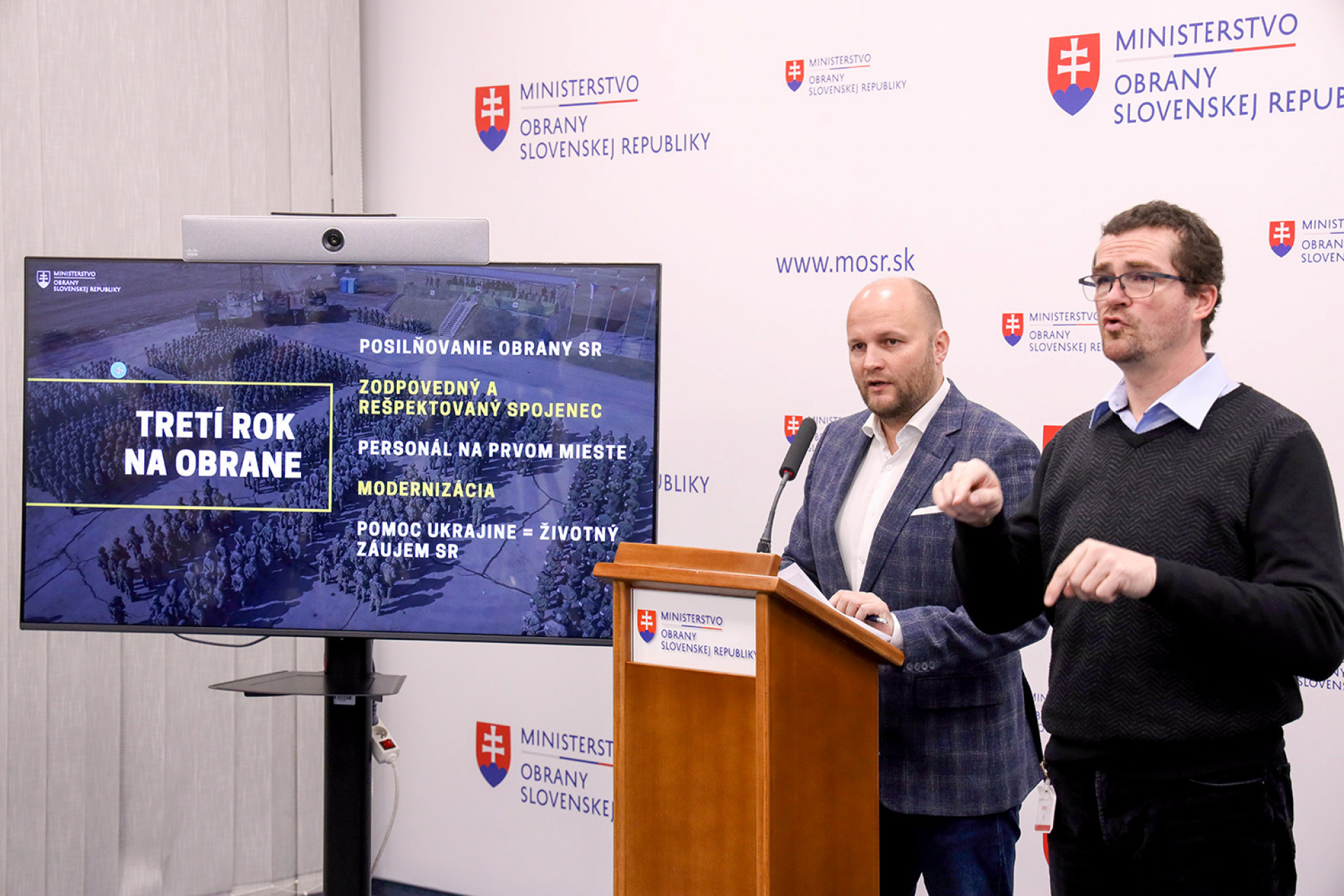
On behalf of all top Defence officials, Defence Minister Jaroslav Naď, State Secretary Marian Majer, and Chief of Defence Gen Daniel Zmeko today gave their assessment of the past year in office – their third year of working closely together at the Ministry of Defence. Live video of the press conference is available here: tlačová konferencia.
Speaking at the press conference, Defence Minister Jaroslav Naď began by summing up his first three years in office, saying: “2022 was the most difficult of all the three years. The first year was about COVID-19 and the inherited state of affairs. The second year was, once again, marked by the pandemic. In addition, in 2021 we conducted a very demanding evacuation from Afghanistan and launched modernisation projects. The past third year was unequivocally about strengthening SVK defences, modernising the Slovak Armed Forces, and concurrently about our solid alliance with and support for the victim of the aggression, our neighbour under attack – Ukraine.”
On this note, Minister Naď highlighted the responsible alliance in action on NATO's eastern flank, meaning that last year a significant contribution was made to the quality of SVK defences with the standup of the NATO Multinational Battlegroup in Slovakia, which involves Allied forces and equipment – all at a value that Slovakia could not afford on its own. Troop rotations in and out of Slovakia are based on our quality relations and agreements, and Allies are interested in securing a systematic strengthening of SVK defence capabilities, Minister Naď announced. On the protection of SVK skies, he greatly appreciated help from Czechia and Poland and the announced involvement of Hungary in safeguarding SVK airspace until the delivery of the new F-16 fighter jets to the Slovak Air Force.
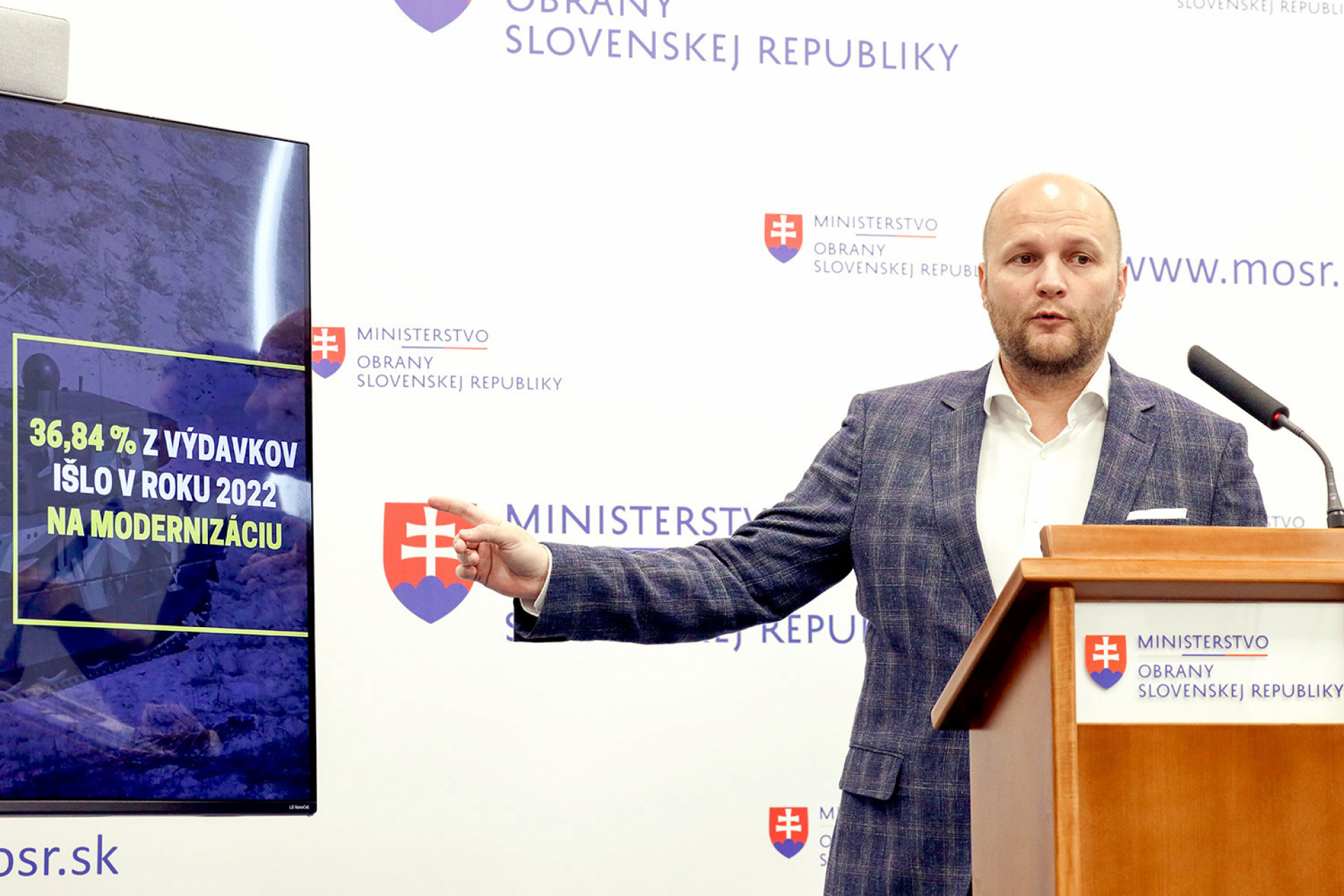
Importantly, this responsible alliance is also about delivering the Defence Investment Pledge. As Slovakia marks its [19th] NATO membership anniversary today, Minister Naď pointed to continual defence spending increases over the past three years. “In 2020, at a time when we came to the Ministry of Defence, the Defence budget was at 1.65% of GDP, but it climbed to 1.92% of GDP due to the additional COVID-19 measures that had been put in place, although this rise was unrelated to the core of Defence,” he said, noting that the Defence spend went up to 1.77% of GDP in 2021 and 1.84% of GDP in 2022, with 36.84% of the latter on Slovak Armed Forces modernisation as a major milestone for Defence. In 2023, increased investment will take Slovakia's approved defence spending to 2.10% of GDP.
On modernisation, Minister Naď said: “Slovakia needs to see modernisation go through like a dose of salts, which is something our Allies appreciate very much. I am so proud of the difference between what I, as the defence minister, had inherited from my predecessors in office and what awaits Slovakia in the coming parliamentary term.” With the ongoing modernisation programmes at different stages of implementation, specific examples of the equipment procured are the tracked and wheeled infantry fighting vehicles, additional equipment for the UH-60M Blackhawks, Defence Medical Service ambulances, a passive surveillance radar, whilst the equipment already delivered includes six Zuzana 2 howitzers, three airport surveillance radars, munitions worth almost €23mil, nearly 1,600 light machine guns, specialist weather stations for field artillery, and thousands of tactical combat vests for service personnel. He went on to praise the U.S. $200m gift which, as proposed by the Slovak Armed Forces, will go towards purchasing three types of new equipment – Oshkosh 4x4 JLTVs, 5,000 M4 rifles, and sophisticated anti-drone systems.
Speaking about the procurement of trucks and the need to unify the vehicle platforms in service with the Slovak Armed Forces in order to deliver better logistics performance, State Secretary Marian Majer said: “We are seeking solutions to support the needs of the Armed Forces to the maximum extent possible.” The procurement process requires a sequence of steps – including, among others, getting an input from the Value for Money Unit [SVK Ministry of Finance] and the government's approval, as well as managing the contract negotiations. State Secretary Majer emphasised that the MOD is working on all modernisation priorities in full compliance with the Public Procurement Act and the rules of transparency. Looking ahead, State Secretary Majer said: “We keep working as if no elections are coming up – this means we are preparing projects and where we finish working to the best of our ability and with our best conscience, others will take over.”
Over the given period, equipment maintenance operations have intensified as well. Between 2019 and 2022, there was a tenfold increase in the cost of maintenance operations, reaching 4.87m last year. Similarly, the purchases of military clothing reached a historic high in 2022 – almost €23m was spent on military uniforms and boots, tactical combat vests and rucksacks which came in thousands. On defence infrastructure, whilst last year saw the repair of defence infrastructure worth €17.57m, €24.50m will be spent for this purpose this year, in stark contrast to €3.26m in 2020. “No soldier should be in a situation where parts of the ceiling fall on his or her head. We need to bring Service conditions for soldiers up to the 21st century standards,” Minister Naď said, adding that €18.64m was spent on the construction of new buildings in 2022.
On legislation, 2022 was a very intensive year. Of the 24 documents presented to Parliament over the past three years, half of them were submitted last year. Similarly, of the 144 documents forwarded to the SVK Government over the past three years, 66 were submitted in 2022. These figures show that what we have achieved in three years is more than the previous government had achieved in four years (2016-2020). Overall, most of the fundamental legislative changes required were related to the Active Duty Soldiers in the State Service Act. Service personnel themselves contributed to the creation of this legislation with over 500 comments. In addition, we also worked on the Slovak Armed Forces Act, which, among others, allows for anti-drone operations. And, after being over 20 years in effect, the Military Intelligence Act needed to be amended too.
As Minister Naď reminded us about last year's SVK deployments, in addition to engaging in tasks related to the defence of the country, the Slovak Armed Forces participated in 64 military exercises at home and abroad, deployed on 11 international crisis management missions and operations with 839 servicemen and women rotating in and out of them, and helped put out fires in Czechia and Slovenia.
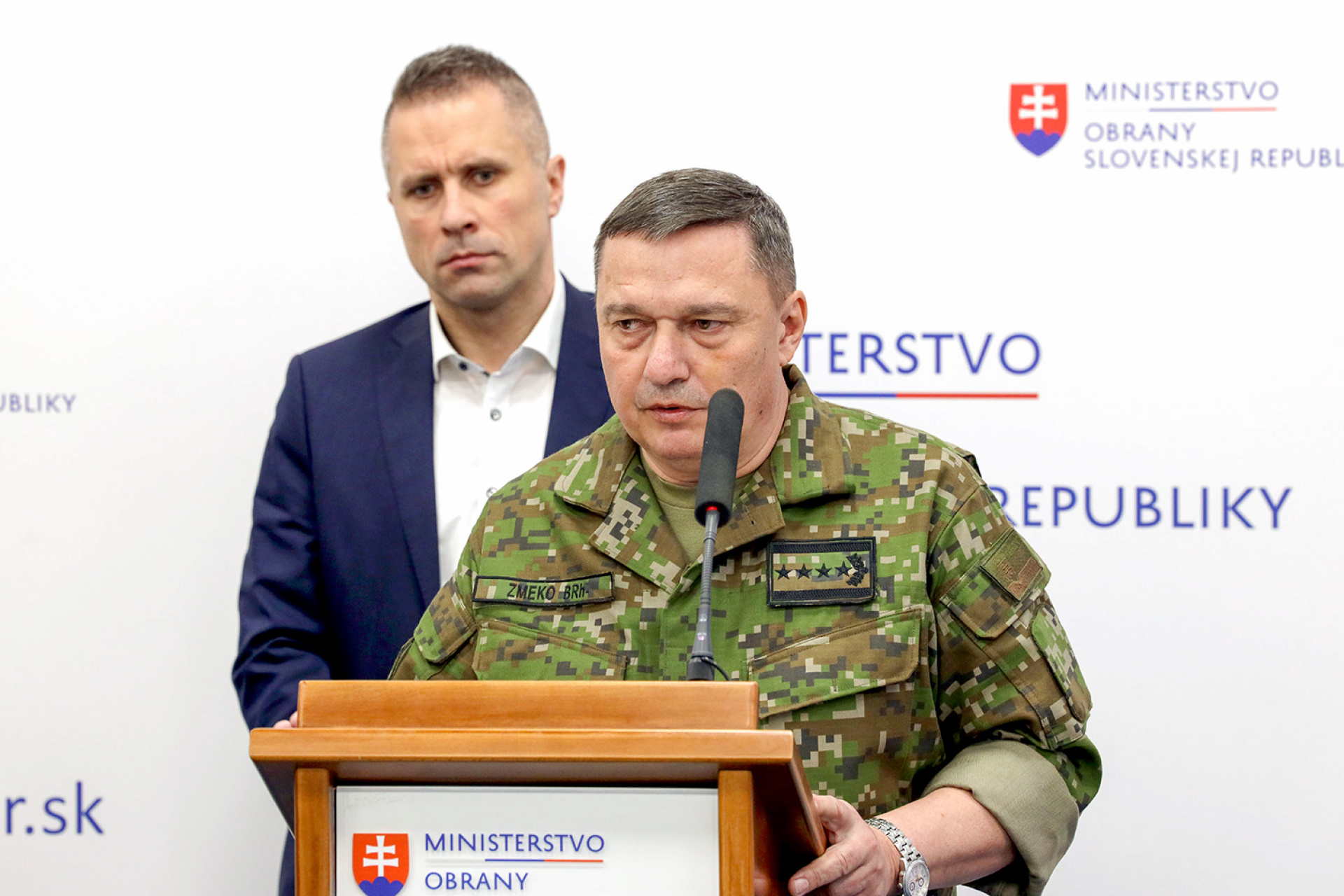
According to Chief of Defence Gen Daniel Zmeko, Slovakia's defence capability has expanded over the given period. This has also been reflected in military training and exercises, based on realistic planning. In addition, the Table of Personnel Requirements for the Slovak Armed Forces was increased by 900 soldiers last year and will be increased by an additional 1,000 soldiers this year and next year. In 2022, we were successful in recruiting 1,323 new soldiers – which is a record high since the Slovak Armed Forces' full professionalisation.